#1 Daily News Updates, Politics, Crime, movie reviews, Latest News - dynamicleader.in
Supreme Court Archives » Dynamic Leader English - Daily News Updates
Home Posts tagged Supreme Court
National

“Nobody Can Browbeat Us”: Supreme Court Firmly Rejects Political Pressure Tactics

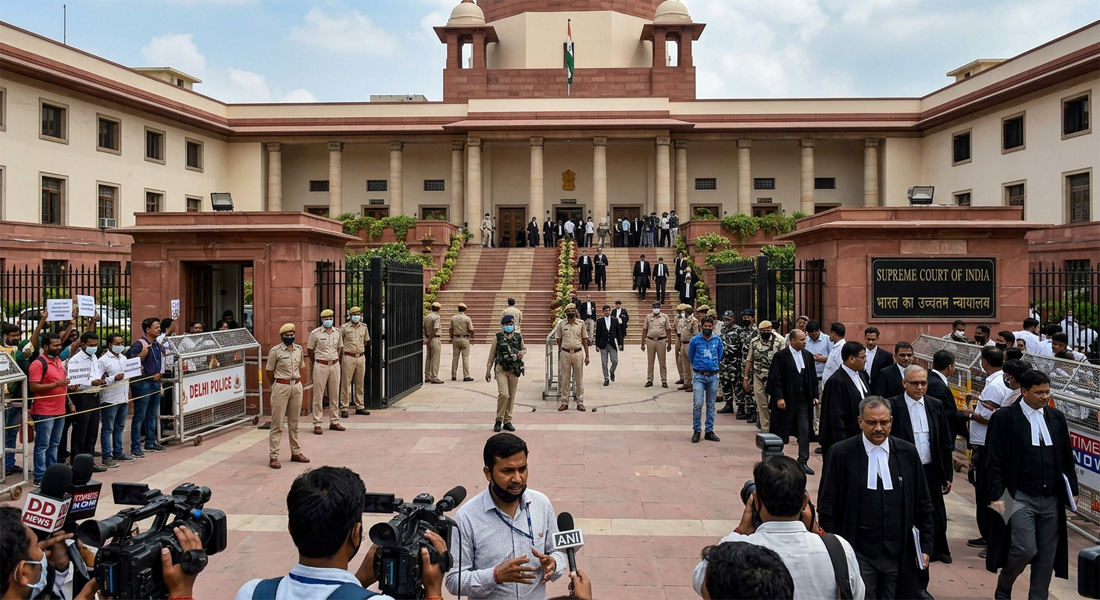
The Supreme Court of India firmly declared that “nobody can browbeat us” while hearing a petition regarding an October 12 protest march led by prominent Opposition leaders, including Rahul Gandhi and other INDIA bloc figures, toward the judicial complex.

The bench, led by Chief Justice of India Surya Kant alongside Justice Joymalya Bagchi, addressed concerns surrounding attempts to exert external pressure on the judiciary. Responding to submissions by counsel alleging organized efforts to influence the court during the demonstration, CJI Surya Kant stated that the bench remains fully observant of activities occurring beyond the courtroom doors. Emphasizing independence, the Chief Justice remarked that the judges do not sit in “ivory towers” and are entirely mindful of statements made publicly versus those presented inside the courtroom, dismissing external pressure tactics as ineffective and fragile.

The petition, filed by advocates, sought judicial guidelines to regulate demonstrations around the Supreme Court and High Courts, proposing an absolute prohibition on political protests inside judicial precincts. The plea further requested measures to prevent political campaigns aimed at influencing pending judicial proceedings and urged the court to consider criminal contempt proceedings against political leaders involved in the event. Concerns were also raised regarding safety during the procession, with lawyers noting incidents of public disruption and alleging that a pregnant journalist was pushed during the demonstration.

In response to the petition, the apex court issued notices to relevant parties, including political leaders involved in leading the procession, seeking their formal explanation regarding their conduct during the event. To ensure a comprehensive review, the bench directed all law enforcement agencies to secure and preserve all digital evidence, including CCTV recordings collected during the demonstration, while permitting private parties to submit relevant video footage as well.

The hearing occurred amidst broader judicial scrutiny involving petitions related to the Special Intensive Revision (SIR) of electoral rolls and associated public protests in the national capital. The Supreme Court emphasized the need to preserve public order, safeguard the independence of the judicial system, and ensure that court proceedings remain entirely free from external intimidation or political posturing.

Dynamic Leader News Desk 
International

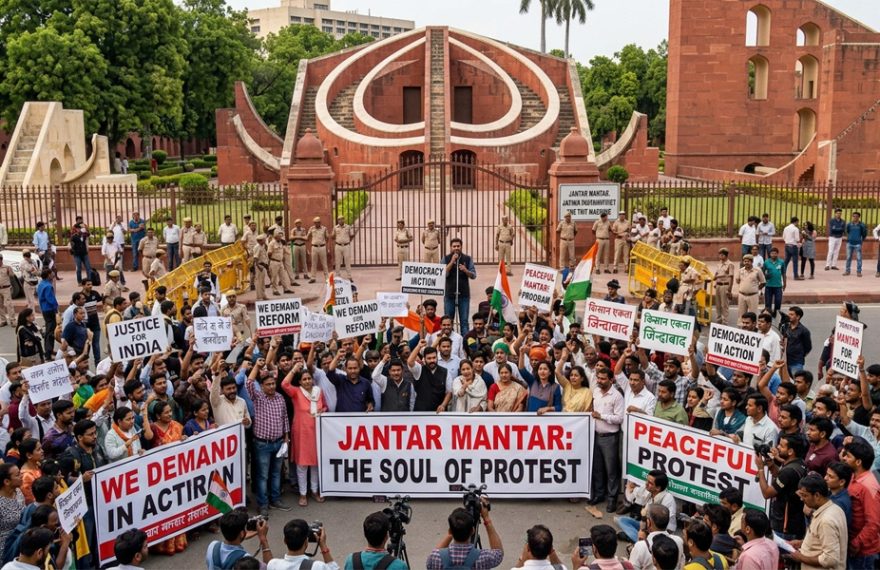
New Capital Grounds: Delhi Police Officially Relocate Demonstrations Away from Jantar Mantar

In a landmark administrative shift, the Delhi Police have officially de-notified Jantar Mantar as an authorized venue for public agitations, rallies, and sit-in demonstrations. The strategic decision follows directions from the Supreme Court asking authorities to identify alternative sites with proper facilities for peaceful demonstrators, as well as a comprehensive evaluation by a high-level committee constituted by the Union Ministry of Home Affairs. Issued through a formal standing order by the Delhi Police Commissioner, this measure marks the end of Jantar Mantar’s long-standing status as the central focal point for public dissent in the national capital.

The decision to strip the 18th-century astronomical observatory site of its protest status stems from mounting urban and security challenges in Central Delhi’s Lutyens zone. Located in close proximity to Parliament and crucial government ministries, the area frequently suffered from severe traffic congestion, transit barricading, and business disruptions during large assemblies. Local commercial federations and resident groups had repeatedly voiced concerns over lost revenue, access restrictions, and safety risks, prompting authorities to seek a permanent solution that minimizes public inconvenience while protecting historic monuments.

To maintain a balance between public order and the democratic right to peaceful assembly, law enforcement officials have designated three alternative venues across different parts of the capital. These newly named locations include the historic Ramlila Ground in Central Delhi, Burari Ground in North Delhi, and the CBD Ground in Shahdara, East Delhi. Authorities have indicated that updated Standard Operating Procedures will soon be released to outline specific licensing rules, safety measures, and capacity limits for organizers hosting events at these designated spaces.

The administrative overhaul has drawn varied responses across the city’s civil and political landscape. While resident welfare associations and local traders have welcomed the shift for restoring smooth traffic flow and regular commercial activities, civil society groups and activists express concern that moving demonstration sites further from power corridors may reduce the immediate visibility of public grievances. Nevertheless, with barricades being cleared along Parliament Street, Jantar Mantar begins its transition back into serving purely as a preserved national heritage monument and cultural landmark.

Dynamic Leader News Desk.

Bangalore Karnataka National

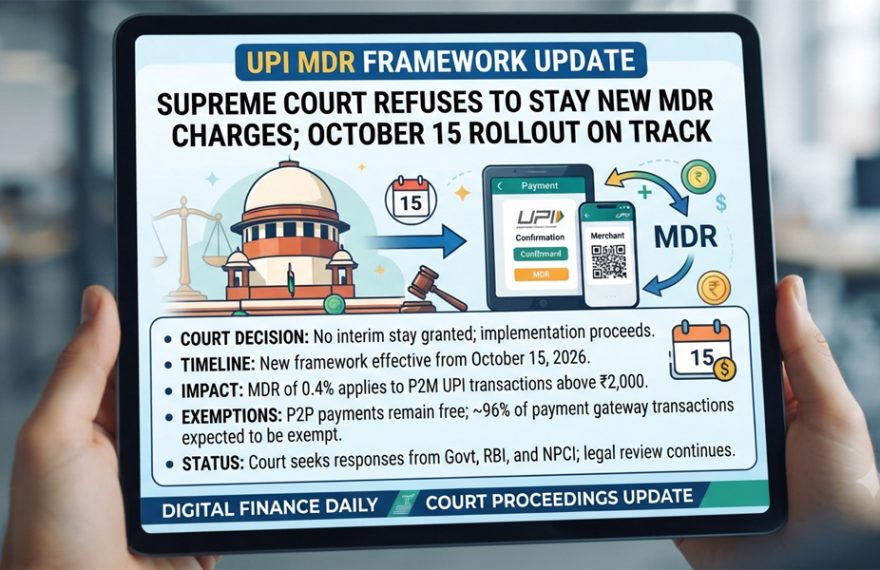
Supreme Court Refuses to Stay New UPI MDR Framework, October 15 Rollout Remains on Track

Supreme Court Refuses to Stay New UPI MDR Framework, October 15 Rollout Remains on Track

New Delhi, September 29, 2026: The Supreme Court has declined to grant an interim stay on the Centre’s decision to introduce a Merchant Discount Rate (MDR) on specified Unified Payments Interface (UPI) person-to-merchant transactions above 2,000. The decision means the proposed framework remains scheduled for implementation from October 15, 2026, unless there is a further order or policy change.

A three-judge bench headed by Chief Justice of India Surya Kant, along with Justices Joymalya Bagchi and V. Mohana, was hearing a petition challenging the government’s notifications introducing the new UPI merchant-payment framework.

Instead of stopping the proposed rollout, the court has sought responses from the Union government, Reserve Bank of India (RBI) and National Payments Corporation of India (NPCI). The respondents have been asked to submit their replies within four weeks. The court has also questioned the legal basis and nature of the proposed charge.

Under the new framework, eligible person-to-merchant UPI payments above 2,000 will generally attract an MDR of 0.4 per cent. The charge is subject to limits, including a maximum MDR of 300 for transactions of 75,000 and above. Payments between individuals will continue to remain free.

The government has maintained that MDR is not a tax or government fee. Instead, it is described as a charge within the digital payments ecosystem, with the amount distributed among participating entities involved in processing the transaction. The government has also stated that the MDR should not be separately recovered from customers.

The framework also provides exemptions and special provisions for certain categories. According to the Centre’s submissions before the Supreme Court, around 96 per cent of transactions routed through payment gateways are expected to remain exempt. Certain essential-service transactions will have a lower cap, while small merchants covered under the zero-MDR framework will continue to receive payments without the new charge.

The proposed change comes after nearly six years during which UPI merchant payments operated without a conventional MDR. The government has argued that the revised system is intended to support the long-term sustainability of the digital-payment ecosystem as transaction volumes continue to expand.

For ordinary UPI users, the immediate impact is expected to be limited because the proposed MDR is structured as a merchant-side charge rather than a direct customer transaction fee. However, the treatment of the additional cost by individual businesses could become an important issue once the framework takes effect.

  1. The Supreme Court’s latest order does not finally determine whether the MDR framework is legally valid. The court has only declined to halt its implementation at this stage while seeking responses from the concerned authorities.

The next phase of the case will therefore focus on the government’s legal and technical justification for the framework. Until the court issues another direction, the proposed October 15 implementation date remains unchanged.

Dynamic Leader News Desk

Prathiban DC