#1 Daily News Updates, Politics, Crime, movie reviews, Latest News - dynamicleader.in
Editor: Parthiban D C, Author at Dynamic Leader English - Daily News Updates
Home Articles posted by Editor: Parthiban D C
Bangalore Business

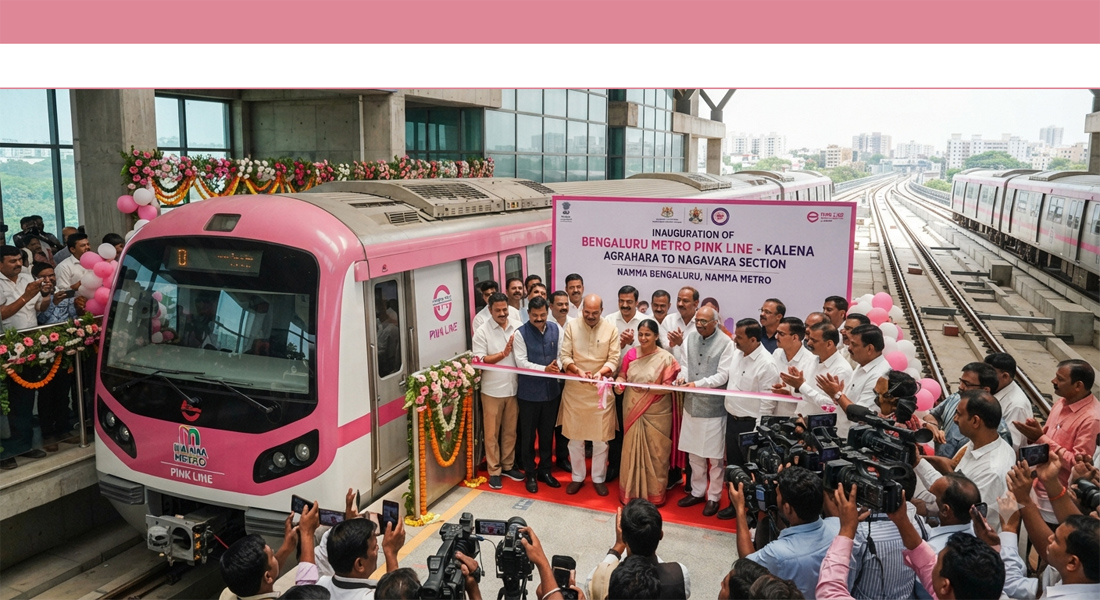
Bengaluru Namma Metro Pink Line Gears Up for Operational Debut: Elevated Stretch Set to Transform South Bengaluru Commuting

Bengaluru, September 2026: Bengaluru’s mass transit network is entering a transformative new phase as the much-anticipated Pink Line prepares for its grand opening, marking a major milestone in the city’s urban infrastructure expansion. Connecting key residential hubs and high-density commercial corridors, the initial phase of this vital corridor focuses on the 7.5-kilometer elevated section running from Kalena Agrahara to Tavarekere along the bustling Bannerghatta Road. State transport authorities and the Bangalore Metro Rail Corporation Limited (BMRCL) have announced that this initial stretch is structurally complete, undergoing rigorous safety assessments, and is slated for public rollout following final green lights from central authorities.

The newly completed elevated route comprises six strategically positioned stations designed to alleviate severe traffic congestion in south Bengaluru. Commuters will soon be able to board trains across Kalena Agrahara, Hulimavu, the Indian Institute of Management Bangalore (IIMB), JP Nagar 4th Phase, Jayadeva Hospital, and Tavarekere. Among these, the Jayadeva Hospital station stands out as a critical multimodal intersection, offering passengers a seamless interchange facility with the existing Yellow Line. This integration is expected to drastically reduce travel times across the southern quadrant of the city and connect thousands of daily office-goers, students, and residents to the broader Namma Metro grid.

Beyond the immediate convenience for south Bengaluru residents, the opening of this segment carries monumental significance for the city’s overall transit evolution, pushing the cumulative operational length of Namma Metro past the landmark 100-kilometer threshold. Transport planners have incorporated modern signaling and state-of-the-art rolling stock to ensure high frequency, punctuality, and safety. Furthermore, the corridor features advanced driverless-capable communication-based train control technologies, positioning Bengaluru at the forefront of modern Indian transit innovation.

While the initial elevated stretch prepares to welcome its first waves of passengers, work on the remainder of the expansive 21.26-kilometer Pink Line project—which eventually extends all the way to Nagawara via a complex 13.76-kilometer underground network—continues to progress. The subsequent underground phase, featuring twelve additional stations including major business districts like MG Road and Shivajinagar, is slated for commissioning in the coming months. For now, local commuters along Bannerghatta Road can look forward to significantly smoother daily journeys as the city ushers in a new era of connected, efficient, and sustainable public transit.

Dynamic Leader News Desk

Prathiban DC
Business International

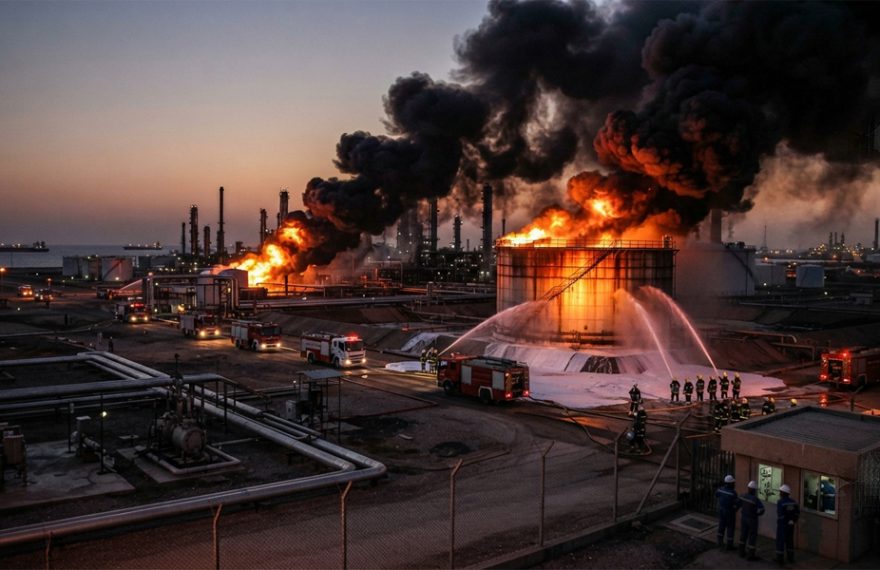
Renewed Regional Tensions Rise as Critical Iranian Oil and Gas Infrastructure Suffers Extensive Airstrike Damage

Middle Eastern geopolitical and energy markets have experienced a severe jolt following a series of precision airstrikes that targeted crucial petroleum production and processing facilities within Iran. These high-impact military developments have immediately heightened global anxieties regarding the stability of international crude oil supplies, the security of critical shipping transit corridors, and the broader economic ramifications for energy-importing nations across the globe.

The latest aerial bombardments directly focused on high-value energy installations, including major components of the country’s primary natural gas distribution network and essential oil refining centers. Industry analysts and international commodity monitors have highlighted that these vital facilities serve as the backbone for domestic power generation, industrial processing, and export operations. Consequently, the direct hits have triggered immediate localized output disruptions, forced temporary operational halts at several key processing plants, and sent rapid shockwaves through global crude and natural gas futures markets.

International reactions to the escalation have been swift and deeply concerned. Neighboring nations and regional governments have expressed acute alarm over the immediate threat of widespread environmental hazards, potential ecological fallout, and severe long-term security risks associated with targeting core hydrocarbon infrastructure. Global energy watchdogs, including organizations tracking shipping lanes, are maintaining round-the-clock surveillance across the Persian Gulf, the Strait of Hormuz, and surrounding maritime chokepoints. Authorities are actively evaluating escalating risks to commercial tankers and maritime trade routes as regional stakeholders brace for potential secondary developments.

Governments, trade bodies, and corporate stakeholders worldwide are strongly advocating for immediate diplomatic restraint to prevent a catastrophic widening of the conflict that could permanently fracture global fuel supply chains. While international mediators work around the clock to open de-escalation channels, global commodity markets remain on high alert. Industry experts continue to monitor the structural extent of the damage inflicted upon the petroleum facilities and evaluate how quickly operations can resume once safety clearances and regulatory assessments are finalized.

Dynamic Leader News Desk

Prathiban DC
Bangalore Karnataka

One in Four Inspected LPG Cylinders Found Underfilled During Karnataka State Crackdown

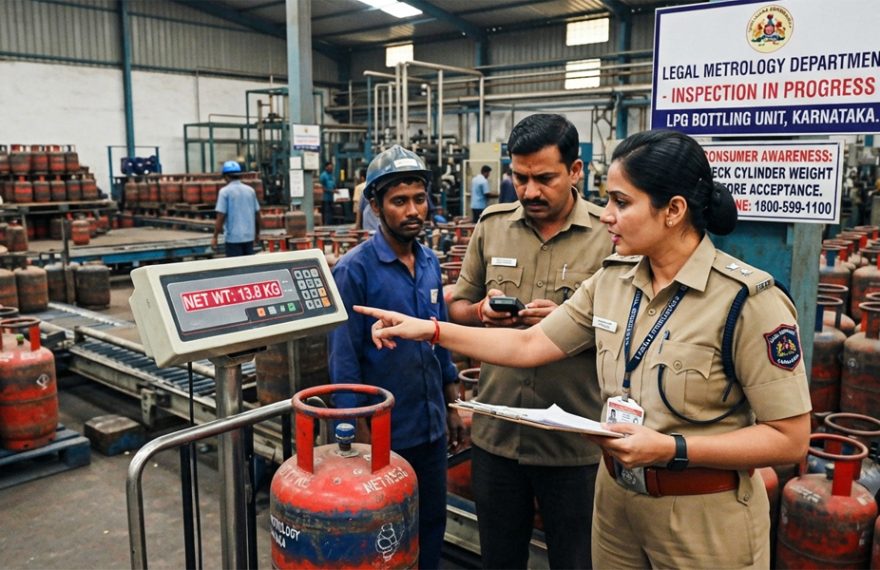
Bengaluru, September 29, 2026: In a striking revelation concerning household consumer rights, recent surprise inspections conducted across Karnataka revealed that approximately 25% of inspected LPG cylinders contained less gas than their officially declared quantity. The enforcement drive, spearheaded by the Legal Metrology Department, aimed to scrutinize packaging precision and ensure fair trade practices across the state’s energy supply chain.

During the intensive state-wide sweep, authorities closely evaluated 17 operational liquefied petroleum gas bottling units representing major public-sector enterprises like IOCL, BPCL, and HPCL, alongside private energy suppliers. Officials physically weighed a total of 1,530 filled cylinders to verify their net contents. Out of the total checked, exactly 382 cylinders making up 25% of the sample size were found to carry lower gas volumes than mandated, though officials noted they remained within permissible error limits. Meanwhile, roughly 13.4% matched the precise target mark, and over 60% contained slightly excess fuel.

Prompted by these discrepancies, the regulatory authority registered active cases against non-compliant entities and collected total fines amounting to 79,000 for rule violations. State officials emphasized that accurate measurement is a fundamental consumer right, underscoring that citizens must receive the complete volume of fuel they pay for without short changing.

In response to the findings, consumer affairs authorities have strongly encouraged residents to actively verify cylinder weights at the time of delivery before accepting them from delivery personnel. Households across Karnataka who suspect weight irregularities or delivery discrepancies are urged to report their grievances directly to the Legal Metrology Department’s dedicated toll-free helpline at 1800-599-1100.

Dynamic Leader News Desk

Prathiban DC
Bangalore Karnataka National

Supreme Court Refuses to Stay New UPI MDR Framework, October 15 Rollout Remains on Track

Supreme Court Refuses to Stay New UPI MDR Framework, October 15 Rollout Remains on Track

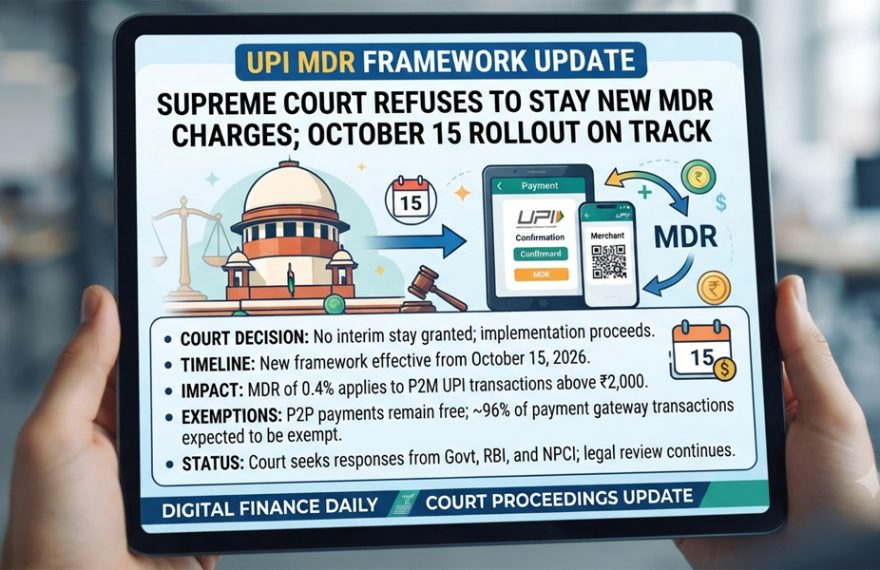
New Delhi, September 29, 2026: The Supreme Court has declined to grant an interim stay on the Centre’s decision to introduce a Merchant Discount Rate (MDR) on specified Unified Payments Interface (UPI) person-to-merchant transactions above 2,000. The decision means the proposed framework remains scheduled for implementation from October 15, 2026, unless there is a further order or policy change.

A three-judge bench headed by Chief Justice of India Surya Kant, along with Justices Joymalya Bagchi and V. Mohana, was hearing a petition challenging the government’s notifications introducing the new UPI merchant-payment framework.

Instead of stopping the proposed rollout, the court has sought responses from the Union government, Reserve Bank of India (RBI) and National Payments Corporation of India (NPCI). The respondents have been asked to submit their replies within four weeks. The court has also questioned the legal basis and nature of the proposed charge.

Under the new framework, eligible person-to-merchant UPI payments above 2,000 will generally attract an MDR of 0.4 per cent. The charge is subject to limits, including a maximum MDR of 300 for transactions of 75,000 and above. Payments between individuals will continue to remain free.

The government has maintained that MDR is not a tax or government fee. Instead, it is described as a charge within the digital payments ecosystem, with the amount distributed among participating entities involved in processing the transaction. The government has also stated that the MDR should not be separately recovered from customers.

The framework also provides exemptions and special provisions for certain categories. According to the Centre’s submissions before the Supreme Court, around 96 per cent of transactions routed through payment gateways are expected to remain exempt. Certain essential-service transactions will have a lower cap, while small merchants covered under the zero-MDR framework will continue to receive payments without the new charge.

The proposed change comes after nearly six years during which UPI merchant payments operated without a conventional MDR. The government has argued that the revised system is intended to support the long-term sustainability of the digital-payment ecosystem as transaction volumes continue to expand.

For ordinary UPI users, the immediate impact is expected to be limited because the proposed MDR is structured as a merchant-side charge rather than a direct customer transaction fee. However, the treatment of the additional cost by individual businesses could become an important issue once the framework takes effect.

  1. The Supreme Court’s latest order does not finally determine whether the MDR framework is legally valid. The court has only declined to halt its implementation at this stage while seeking responses from the concerned authorities.

The next phase of the case will therefore focus on the government’s legal and technical justification for the framework. Until the court issues another direction, the proposed October 15 implementation date remains unchanged.

Dynamic Leader News Desk

Prathiban DC

 

International

Noah’s Ark Mystery Deepens as Researchers Drill Into Turkey’s Boat-Shaped Formation

Doğubayazıt, Türkiye: A decades-old mystery surrounding a boat-shaped geological formation in eastern Türkiye has entered a new phase after researchers began deep drilling and subsurface investigations at the site associated with the biblical story of Noah’s Ark.

The Durupınar Formation, located in Ağrı province near Mount Ararat, has attracted attention since it was identified in aerial photographs in 1959. Measuring approximately 157 metres in length, the unusual formation has long been debated by researchers, with competing explanations suggesting either a natural geological structure or the remains of an ancient vessel.

In 2026, the investigation has moved beyond surface observations and remote sensing. A research program led by archaeologist Prof. Dr. Cenker Atila of Sivas Cumhuriyet University, together with an international research team, received official authorization from Turkish authorities to conduct detailed geological and geophysical investigations at the site.

Researchers have used ground-penetrating radar, electrical-resistivity surveys, LiDAR mapping and soil sampling to examine what lies beneath the formation. The project’s published research notes that earlier surveys identified unusual linear features, right-angle patterns and possible corridor- or room-like structures underground. However, the researchers themselves stress that these observations are suggestive rather than conclusive.

One of the latest developments is the collection of core samples from deeper sections of the formation. According to the research team, drilling has reached depths of up to approximately 18 metres, allowing material from beneath the surface to be collected for laboratory analysis. The team has also reported encountering cavities and organic-rich layers during the drilling programme.

Soil testing has produced another point of interest. Researchers reported that samples taken from inside the formation contained approximately three times more organic material than samples collected from surrounding areas. The finding is being investigated further, but organic-rich soil alone cannot establish that the material came from a wooden ship.

The research team has also announced plans to use a small underground robotic system to investigate selected subsurface spaces identified during earlier surveys. The objective is to obtain additional visual and physical evidence without carrying out large-scale excavation.

Despite the renewed excitement, there is currently no independently verified archaeological evidence proving that the Durupınar Formation is Noah’s Ark. The site’s unusual appearance has been debated for decades, and geological explanations for its formation remain part of the wider discussion.

The current investigation is therefore significant mainly because researchers are now collecting physical samples that can be subjected to laboratory testing. The research program says the samples and other findings will undergo further analysis, with additional scientific results expected as the project progresses.

For now, the Durupınar Formation remains an intriguing archaeological and geological mystery rather than a confirmed discovery of Noah’s Ark. The results of laboratory testing and independent scientific examination will be crucial in determining what the unusual formation actually contains.

Dynamic Leader News Desk

Prathiban DC

Bangalore Karnataka

Karnataka’s Drought Situation Comes Under Centre’s Lens From October 3

Bengaluru, September 28, 2026: The Centre has confirmed that three Central teams will visit Karnataka from October 3 to assess the state’s drought situation, including crop damage, water availability and conditions faced by farmers across affected regions.

The assessment comes after Karnataka declared a large number of taluks drought-affected and sought financial assistance from the Union government. The Central teams are expected to compare the state’s assessment with ground-level conditions before further decisions are taken on drought relief.

Three Teams to Cover Major Regions

The Inter-Ministerial Central Team will be led by Joint Secretary Ajeet Kumar Sahu. The teams have been assigned different parts of the state for the field assessment.

One team will cover Tumakuru, Chitradurga, Davanagere and Vijayanagara. A second team will visit Hassan, Mysuru and Chamarajanagar, with Mandya also being considered as part of the assessment, particularly in connection with water levels in the Krishna Raja Sagar reservoir.

The third team will focus on Yadgir, Raichur, Bagalkot and Koppal in North Karnataka.

The teams are scheduled to begin the assessment process from October 3, with officials expected to inspect affected areas and interact with state and district authorities.

177 Taluks Declared Drought-Affected

Karnataka has so far declared 177 of its 240 taluks as drought-affected. Ground-level verification is also continuing in another 50 taluks, meaning the number of affected areas could change as assessments progress.

The drought situation has raised concerns over crop production, drinking water availability, livestock and rural livelihoods. The Central assessment is expected to provide an independent field-level picture of the situation.

Karnataka Seeks Central Financial Assistance

The Karnataka government has sought approximately ₹3,705.30 crore in assistance under its drought memorandum for the 2026 Kharif season.

Chief Minister D.K. Shivakumar has also requested the Centre to release 50 per cent of the requested assistance as interim support, along with an advance release of the Central share of disaster-response funds. The state has said immediate assistance is required for measures including crop-loss support, drinking water arrangements and protection of livestock.

The Karnataka government has also announced a 1,250-crore one-time relief package for around 50 lakh farmers, according to reports on the state’s drought response.

Focus Turns to Rabi Season

The drought assessment comes at a crucial time as preparations begin for the Rabi agricultural season.

Union Agriculture Minister Shivraj Singh Chouhan has asked drought-affected states to consider available water and soil moisture while deciding their Rabi cropping plans. Areas with limited water availability may need to consider crops requiring comparatively less irrigation.

The Centre has indicated that the field assessments in Karnataka will help determine the extent of the drought and the assistance required by the state.

For farmers and rural communities across Karnataka, the October assessment is expected to be closely watched as the state awaits further decisions on drought relief and financial assistance.

Dynamic Leader News Desk

Prathiban DC 

Employment Karnataka

Nandini Milk Price Hike Debate Intensifies in Karnataka as Government Reviews Proposal

Bengaluru, September 28, 2026: The debate over a possible increase in Nandini milk prices has intensified in Karnataka, with cooperative milk unions seeking higher prices while the state government examines the impact on both dairy farmers and consumers.

Representatives of  Karnataka’s milk unions have been pressing for an increase in the price of  Nandini milk, citing rising expenses related to cattle feed, fodder, veterinary care, transportation, electricity and milk processing. The issue has gained renewed attention following meetings between milk union representatives and Chief Minister D.K. Shivakumar.

The demand has varied during recent discussions, with milk unions seeking increases ranging from 8 to 12 per litre. In the latest discussions, the unions have sought a 12-per-litre increase, with a portion proposed for milk producer societies. The final amount, however, has not been approved by the state government.

Government Seeks More Data

Chief Minister D.K. Shivakumar has indicated that a final decision will be taken after examining relevant financial and market data. The government is also comparing milk prices and procurement rates in neighbouring states, including Tamil Nadu, Andhra Pradesh and Telangana.

The government has also sought information on production costs, milk procurement, processing expenses and the financial position of the milk unions before taking a decision.

Milk Unions Cite Rising Costs

Milk producers and cooperative unions have argued that the cost of maintaining cattle has increased considerably. Higher prices for feed, fodder, medicines and other inputs have put additional pressure on dairy farmers.

According to recent reports, Karnataka’s 16 milk unions together procure approximately 1.04 crore litres of milk every day and sell around 62.48 lakh litres of milk and curd. More than 25 lakh milk producers are associated with the cooperative network through over 15,000 producer societies.

The drought situation in parts of Karnataka has also affected fodder availability, adding to the concerns of dairy farmers and milk unions.

Financial Performance Varies Among Milk Unions

The financial position of individual milk unions is another factor in the ongoing discussion.

Data reported for April to July 2026 showed that 11 of Karnataka’s 16 milk unions recorded profits, with a combined profit of about 39.95 crore. Five unions reported losses during the same period, with Chikkaballapur recording the highest reported loss of approximately 11.88 crore. Bengaluru’s BAMUL reported a profit of about 15.73 crore during the period.

The figures indicate that the financial situation is not uniform across all milk unions.

Consumers Await Final Decision

Any increase in Nandini milk prices could directly affect household budgets, hotels, restaurants, tea shops and other businesses that use milk regularly.

The government therefore faces the task of considering the demands of milk producers and cooperative unions while also assessing the effect of a price revision on consumers.

For now, no final statewide retail price increase has been announced. The proposal is expected to be considered after the government completes its review and discussions at the Cabinet level.

The final decision will determine whether Nandini milk prices change, the size of any increase and how the additional revenue is distributed between milk producers, cooperative societies and milk unions.

Dynamic Leader News Desk

Prathiban DC 

Karnataka

Karnataka Makes Voting Process Easier for Senior Citizens and PwDs

Bengaluru: Karnataka Chief Minister D.K.Shivakumar had written to the Chief Election Commissioner, requesting that an adult family member be allowed to appear before the Electoral Registration Officer (ERO/AERO) on behalf of senior citizens, persons with disabilities (PwDs), sick persons and overseas voters.

Responding to this request, the Office of the Chief Electoral Officer, Karnataka, has issued directions to make the process easier.

The move will help voters who may find it difficult to appear in person to submit the required documents and information.

The aim is to ensure that every eligible voter in Karnataka can participate in the electoral process without facing unnecessary difficulties.

Karnataka

Prajwal Revanna’s ‘Mobile’ Use in Jail: Case Takes Another Explosive Turn

Bengaluru: Former MP Prajwal Revanna, who is currently in jail in connection with a rape case, is facing fresh questions following the investigation into the alleged use of a mobile phone inside the prison. The latest findings from the Forensic Science Laboratory (FSL) examination of the mobile phone and pen drive are said to have provided new clues to the police investigation.

According to the FSL report obtained by the police, several important digital details have been recovered. During the investigation, a pen drive seized by the authorities was examined and 173 video files were reportedly found. Among them, three videos are allegedly of Prajwal Revanna.

More than 100 pornographic videos were also reportedly found. Police are investigating the source of these videos, how they were used and when they were accessed. Digital evidence suggesting video calls with some women has also reportedly emerged during the investigation.

How Did the Mobile Phone Reach the Jail?
The alleged delivery of a mobile phone to Prajwal Revanna inside Parappana Agrahara Central Prison has also come under investigation. According to police sources, the role of a jail warder is being examined.

There are also allegations that money was paid to arrange the mobile phone. Police are investigating these claims along with the details of the SIM card and phone calls.

It is also alleged that Prajwal Revanna used the mobile phone to make calls to several young women. The police are examining the call records and other digital evidence.

Search for Digital Evidence Continues
Earlier, during a CCB raid, a mobile phone and a pen drive were reportedly recovered. The devices were sent for forensic examination, following which some videos were successfully retrieved. Efforts are continuing to recover additional data.

Based on the videos, call records and other digital evidence, police may question Prajwal Revanna again. Women who were allegedly in contact with him through video calls may also be issued notices and questioned as part of the investigation.

Jail Staff Under Investigation
The role of the concerned jail staff is also being investigated in connection with the alleged supply of the mobile phone. If the allegations are proved, legal action could be taken against those found responsible.

The latest digital evidence recovered from the mobile phone and pen drive is expected to give a new direction to the investigation into the Prajwal Revanna case. The investigation could expand further once the complete FSL findings are available.

Bangalore

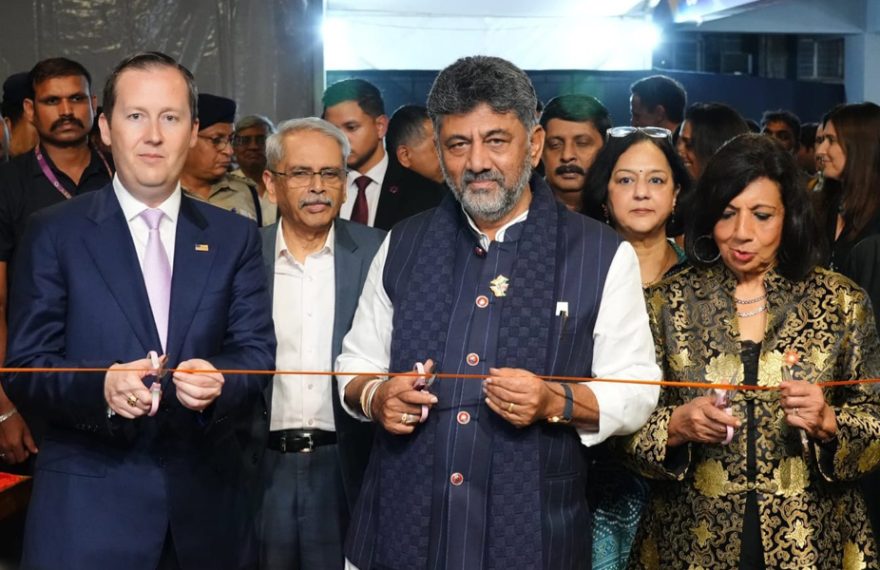
CM D.K. Shivakumar Inaugurates QUANTUM at Science Gallery Bengaluru, Reinforces Karnataka’s Global Quantum Vision

Bengaluru: Karnataka Chief Minister D.K. Shivakumar on Friday inaugurated QUANTUM at Science Gallery Bengaluru, reaffirming the state’s commitment to becoming a global hub for quantum technology, innovation and scientific research.

The event was attended by Sergio Gor, Ambassador of the United States to India, Priyank Kharge, Minister for IT & BT, Byrathi Suresh, Minister for Transport, Dr. Kiran Mazumdar-Shaw, Chairperson of Biocon Group, Dr. Jahnavi Phalkey, Founding Director of Science Gallery Bengaluru, along with several distinguished guests.

Addressing the gathering, the Chief Minister underscored the importance of strengthening the Karnataka–United States partnership through deeper collaboration in technology, innovation, research, skilling and higher education. He said such partnerships would play a crucial role in positioning Karnataka at the forefront of emerging technologies.

Highlighting the state’s long-term quantum roadmap, Shivakumar pointed to key initiatives including India’s first Quantum City at Hesaraghatta, the Karnataka Quantum Mission, and the Centre of Excellence in Quantum Artificial Intelligence and Computing at IIIT Dharwad. He said these initiatives reflect the government’s vision of building a robust and future-ready quantum ecosystem.

Reiterating the government’s commitment to fostering scientific curiosity and public engagement with emerging technologies, the Chief Minister said institutions like Science Gallery Bengaluru are instrumental in inspiring the next generation of innovators, researchers and technology leaders.