Home Archive by category Education

Education

Bangalore Education

Mount Carmel College Attains Deemed-to-be University Status, Plans Major Expansion Near Bengaluru

Prathiban DC

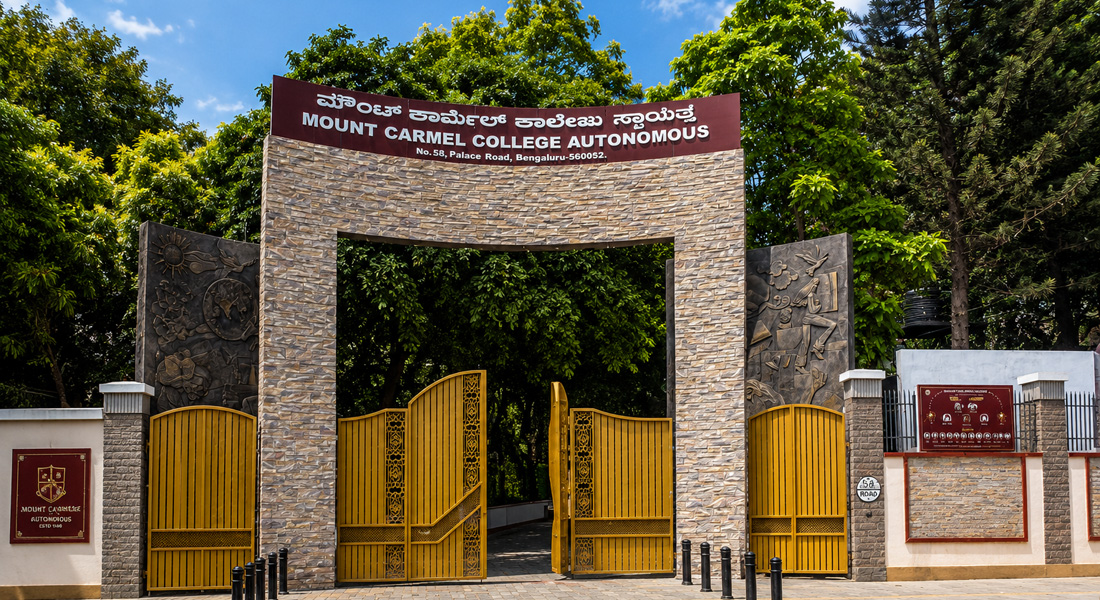
Bengaluru: Mount Carmel College (Autonomous), one of Bengaluru’s prominent higher education institutions, has achieved a significant milestone by receiving Deemed-to-be University status from the Ministry of Education. The announcement marks a new phase in the institution’s academic journey and is expected to open the door for expanded educational opportunities, enhanced research initiatives, and greater academic autonomy.

Speaking to the media, Principal George Lekha highlighted the institution’s future plans following the recognition. She stated that the college has secured approximately 200 acres of land near Devanahalli, where a new campus is planned. The proposed facility is expected to function as a residential campus and serve as a hub for the institution’s future academic and infrastructural growth.

According to the college administration, the new status will enable the institution to introduce a broader range of academic offerings. Plans are underway to expand programmes across various disciplines and provide students with greater flexibility through short-term, medium-term, and long-term courses. The move is aimed at meeting the evolving needs of students and industry while strengthening the institution’s role in higher education.

Despite the expansion plans, the college has assured students and parents that academic activities at its existing Vasanth Nagar campus in Bengaluru will continue without interruption. Current students will be able to complete their programmes as scheduled, and the institution has emphasized that the transition to Deemed-to-be University status will be managed carefully to ensure continuity in teaching and learning.

The administration has also indicated that discussions are in progress regarding academic procedures such as credit transfers, curriculum frameworks, and related matters. These deliberations are intended to ensure a smooth transition for students while aligning programmes with the institution’s new academic structure.

To address questions and concerns from families, the college has scheduled a meeting with parents on June 27. The interaction is expected to provide clarity on the transition process, future academic plans, and the implications of the new status for current and prospective students.

The recognition represents another major chapter in the institution’s recent transformation. In 2024, Mount Carmel College introduced a landmark change by opening all of its undergraduate and postgraduate programmes to male students. The decision ended the institution’s more than seven-decade history as an exclusively women’s college and marked a shift toward a more inclusive educational model.

Today, the institution offers a diverse academic portfolio that includes 54 undergraduate programmes, 18 postgraduate programmes, and 11 doctoral programmes. With the acquisition of Deemed-to-be University status, the college is expected to gain greater flexibility in designing curricula, launching innovative courses, fostering interdisciplinary studies, and strengthening research and innovation initiatives.

Education experts view the development as an important step not only for the institution but also for Bengaluru’s higher education landscape. The planned expansion near Devanahalli is expected to create additional opportunities for students while contributing to the growth of advanced learning and research facilities in the region.

As Mount Carmel College enters this new phase, the institution aims to build on its long-standing academic legacy while adapting to the changing demands of modern education. The newly granted status is expected to support its vision of expanding access, enhancing academic excellence, and preparing students for emerging opportunities in an increasingly dynamic global environment.

Bangalore Education Karnataka

Cracks Behind the Results: Students in Karnataka Struggle with Ground-Level Education Challenges

Prathiban DC

Bengaluru: While Karnataka continues to be recognized as one of India’s leading education hubs, a closer look reveals that thousands of students across the state are facing serious challenges that often go unnoticed behind impressive academic results.

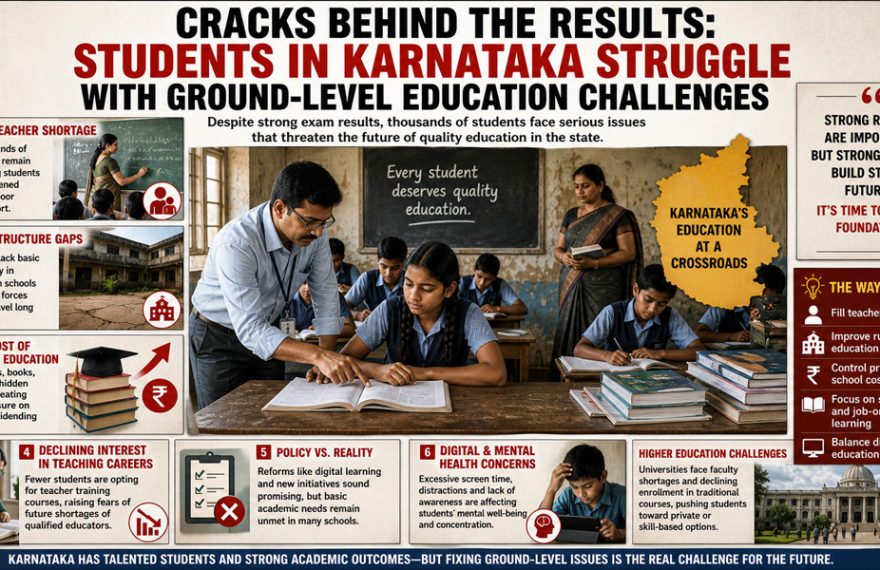
One of the most pressing issues is the shortage of teachers in government schools. With tens of thousands of vacancies still unfilled, many schools, especially in rural areas operate with minimal staff. In some cases, a single teacher is responsible for handling multiple classes and subjects. This not only affects the quality of teaching but also places immense pressure on existing educators, ultimately impacting student learning outcomes.

Infrastructure gaps remain another major concern. While urban schools benefit from better facilities, many rural institutions still lack basic amenities such as adequate classrooms, laboratories, and libraries. The delay in upgrading high schools to pre-university colleges in several regions has forced students to travel long distances for higher education. For many, particularly girls, this becomes a barrier, leading to increased dropout rates.

The rising cost of private education is also adding to the burden on families. Parents across the state have raised concerns over high fees, expensive textbooks, uniforms, and other hidden charges. This growing financial strain has widened the gap between students who can afford quality education and those who rely on under-resourced government schools.

Another worrying trend is the declining interest in the teaching profession. Fewer students are opting for teacher training courses, leading to concerns about future shortages of qualified educators. Experts warn that this could further weaken the education system if not addressed through better incentives and policy support.

Policy implementation remains inconsistent on the ground. While the government has introduced modern reforms such as digital learning and skill-based education, many schools are still struggling to meet basic academic needs. Critics argue that focusing on advanced initiatives without strengthening foundational infrastructure may widen existing gaps rather than bridge them.

In addition to academic challenges, students are also facing digital and mental health concerns. Increased exposure to smartphones and online platforms has led to issues such as distraction, reduced concentration, and screen addiction. Educators and parents have expressed the need for balanced digital usage and better awareness about mental well-being among students.

Higher education institutions are not immune to these problems. Several universities are grappling with faculty shortages and declining enrollment in traditional courses. This has led many students to shift toward private institutions or skill-based programs, raising questions about the long-term sustainability of public higher education.

Despite these challenges, students across Karnataka continue to show resilience and determination. However, education experts emphasize that strong exam results alone do not reflect the true health of the system. Addressing these ground-level issues is essential to ensure that every student, regardless of background, has access to quality education.

Conclusion:
Karnataka’s education system stands at a crossroads. While it boasts talented students and strong academic outcomes, the underlying challenges of teacher shortages, infrastructure gaps, rising costs, and policy implementation must be urgently addressed to secure a better future for the next generation.