Home Archive by category International

International

International

Venezuela Earthquake Live Updates: Death Toll Rises as Massive Twin Quakes Devastate Country!

Prathiban DC

Caracas, June 25, 2026: Venezuela is facing one of the worst natural disasters in its modern history after two powerful earthquakes struck the country within seconds of each other, causing widespread destruction, hundreds of casualties, and a massive emergency response effort. Authorities continue to search for survivors as the scale of the disaster becomes clearer.

According to the latest official information, the death toll has risen to at least 164 people, while more than 970 others have been injured. Rescue teams remain active across several affected regions, and officials have warned that the number of victims could increase as emergency workers reach heavily damaged areas.

The earthquakes struck on Wednesday evening and measured approximately 7.2 and 7.5 in magnitude, occurring less than a minute apart. The tremors were felt across large parts of northern Venezuela, including the capital city of Caracas and surrounding coastal regions. The second quake was among the strongest recorded in the country in more than a century.

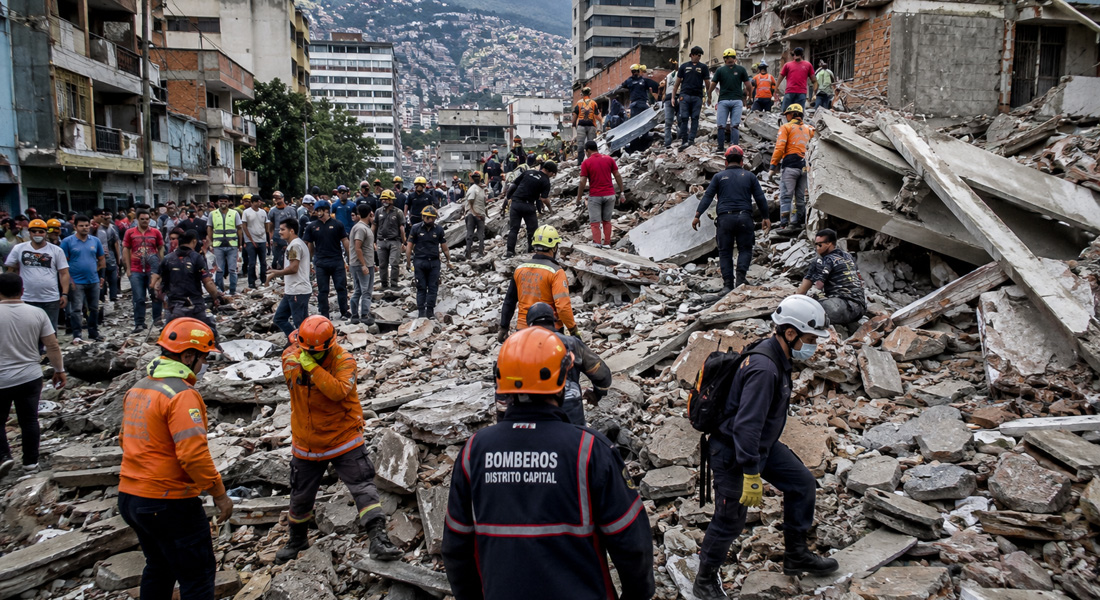
Many residential and commercial buildings suffered severe damage. Entire structures collapsed in some neighborhoods, trapping residents beneath concrete and steel debris. Emergency responders, firefighters, military personnel, and volunteers have been working around the clock to locate survivors and provide assistance to affected communities.

The hardest-hit areas include regions around Caracas and the coastal state of La Guaira, where extensive structural damage has been reported. Local authorities say dozens of buildings have either collapsed or become unsafe for occupancy. Thousands of residents have been forced to leave their homes and seek shelter in temporary facilities or open public spaces due to concerns over aftershocks.

In response to the disaster, the Venezuelan government has declared a state of emergency and mobilized national resources for relief and recovery operations. Emergency command centers have been established to coordinate rescue missions, distribute aid, and assess infrastructure damage. Authorities are also monitoring the possibility of additional aftershocks that could further threaten weakened buildings.

Hospitals in several cities have been overwhelmed by the influx of injured people. Medical teams are treating patients suffering from fractures, head injuries, and other trauma-related conditions. Additional medical supplies and personnel are being deployed to affected regions to support local healthcare facilities.

Transportation and communication networks have also been disrupted. Reports indicate that some roads have been damaged, while power outages and telecommunications interruptions have complicated rescue efforts. Several public services remain partially suspended as engineers inspect infrastructure for safety risks.

The disaster has prompted an international response. Multiple countries and humanitarian organizations have offered assistance, including search-and-rescue teams, medical personnel, emergency supplies, and financial aid. International agencies are coordinating with Venezuelan authorities to help deliver relief to the affected population as quickly as possible.

Seismologists continue to study the event, describing it as an unusually powerful sequence of earthquakes. Experts have urged residents to remain alert for aftershocks and follow official safety guidance. Venezuela lies in a seismically active region, but earthquakes of this magnitude are relatively rare and can have devastating consequences.

As rescue operations continue, the nation remains focused on saving lives, assisting survivors, and beginning the long process of recovery. Authorities have pledged continued support for affected families while emergency teams race against time to locate anyone still trapped beneath the rubble.
 

International

Netanyahu Says Israel Makes Its Own Decisions, Vows Greater Military Independence

Prathiban DC

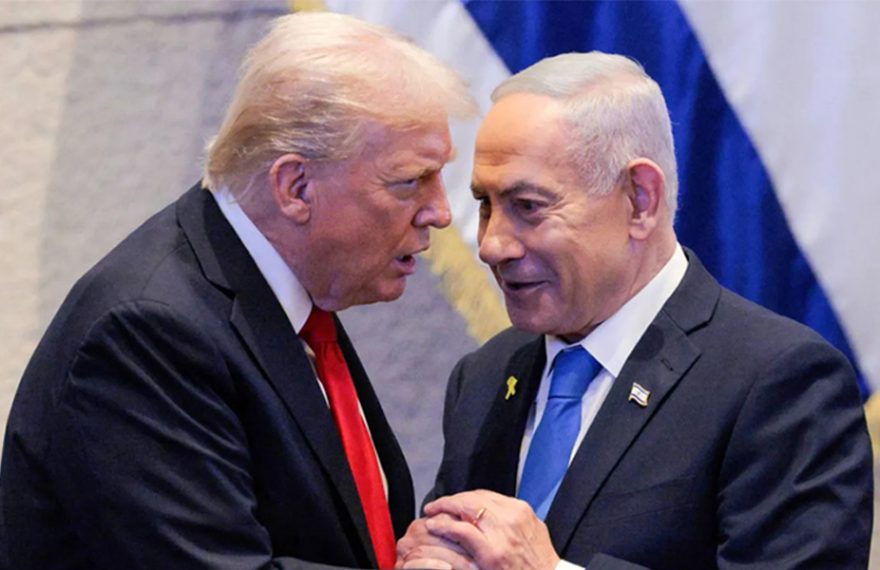
Jerusalem: Israeli Prime Minister Benjamin Netanyahu has strongly rejected suggestions that Israel follows instructions from U.S. President Donald Trump. He said Israel is an independent country that makes its own decisions based on its national interests and security needs.

Speaking at an international gathering in Jerusalem, Netanyahu addressed recent comments and discussions about the close relationship between Israel and the United States. He explained that although he and President Trump share a strong partnership, neither leader controls the decisions of the other.

According to Netanyahu, both Israel and the United States are sovereign nations with their own priorities and responsibilities. He said that while the two governments often cooperate on important issues, there are times when their views differ.

“Israel makes decisions for Israel, and America makes decisions for America,” Netanyahu said. He noted that disagreements between allies are normal and do not weaken the relationship between the two countries. Instead, he said mutual respect and open communication help maintain a strong partnership.

The Israeli Prime Minister emphasized that his government will always act in what it believes is the best interest of the Israeli people. At the same time, he acknowledged the long-standing support Israel has received from the United States in areas such as defense, diplomacy, and security cooperation.

In another meeting with officials involved in Israel’s military and defense planning, Netanyahu spoke about the country’s future security strategy. He said Israel should work toward becoming more self-reliant in military production and defense technology.

Netanyahu stated that Israel cannot depend too heavily on any foreign country, even a close ally like the United States. He argued that building stronger domestic defense industries would allow Israel to respond more effectively to future security challenges.

He called for increased investment in local weapons manufacturing, military research, and advanced defense systems. According to him, producing more military equipment within Israel would strengthen the country’s ability to protect itself during times of conflict.

The Prime Minister stressed that developing independent defense capabilities does not mean Israel intends to reduce its friendship with the United States. Rather, he described it as a practical step to ensure long-term national security.

His remarks came as tensions between Israel and Iran remain high. Netanyahu said Israel’s efforts to counter what it sees as threats from Iran are continuing and that the situation has not yet reached a conclusion.

While he did not provide specific details about future military operations, he indicated that Israel would continue taking measures it considers necessary to protect its security and interests. He reiterated his government’s position that Iran remains one of the most significant challenges facing Israel.

Netanyahu also highlighted the importance of maintaining military readiness and technological superiority in a rapidly changing regional environment. He said Israel must be prepared to face emerging threats while continuing to strengthen its defense infrastructure.

Political observers view Netanyahu’s comments as a message both to international partners and to the Israeli public. His statements underline Israel’s intention to maintain close relations with allies while preserving full control over its national decisions.

The Prime Minister’s remarks reflect a broader goal of increasing Israel’s strategic independence. By expanding domestic defense production and reducing reliance on external suppliers, Israel hopes to strengthen its ability to respond to future challenges on its own terms.

As regional tensions continue, Netanyahu’s message was clear: Israel values its alliances, but it will continue making its own decisions and investing in its own capabilities to safeguard the nation’s future.


International National

Tamil Nadu Govt Formation: Thol Thirumavalavan Says Vijay Must Act on People’s Mandate, VCK Yet to Decide on Support!

Prathiban DC

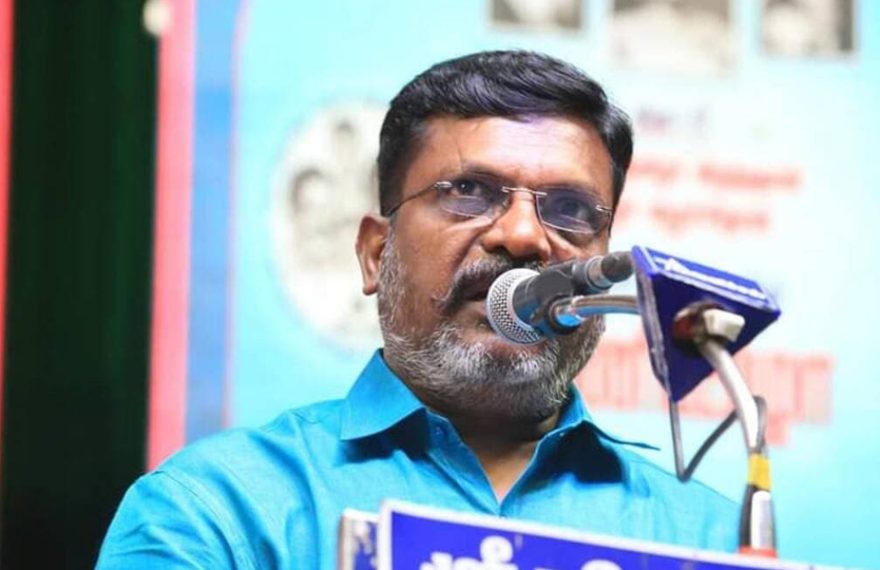
Chennai: In Chennai, Thol Thirumavalavan addressed the evolving political situation in Tamil Nadu, stating that the electorate has given Vijay a clear opportunity to form the next government. He emphasized that this reflects the will of the people, and therefore Vijay has the responsibility to take steps toward establishing a stable administration.

At the same time, Thirumavalavan pointed out that the mandate is not an outright majority. Since the numbers required to independently form a government are not in place, Vijay has been engaging with other political parties to secure the necessary support. According to him, outreach has been made to key allies, including Congress, the Left parties, the Viduthalai Chiruthaigal Katchi (VCK), and the Indian Union Muslim League (IUML).

He noted that Congress has already extended its support to the Tamilaga Vettri Kazhagam (TVK), which strengthens Vijay’s position to some extent. However, the situation remains incomplete, as the Left parties and VCK have not yet arrived at a final decision regarding their stance. Their support could play a crucial role in determining whether a coalition government can be successfully formed.

Thirumavalavan made it clear that his party will not rush into a decision without thorough internal discussions. He stated that consultations with senior and frontline leaders of the VCK are expected to take place very soon, possibly within the next day or two. These discussions will focus on evaluating the political scenario, the expectations of the party cadre, and the broader implications of supporting the proposed government.

He further explained that only after these deliberations are concluded will the VCK be in a position to formally respond to Vijay’s request for support. The party aims to take a considered and collective decision that aligns with its principles as well as the interests of the people it represents.

The remarks come at a time when political negotiations are actively underway, and all eyes are on how alliances will shape up in the coming days. With no single party holding a decisive majority, the role of supporting parties like VCK and the Left is expected to be critical in determining the formation and stability of the next government in Tamil Nadu.

International National

108 Seats, One Big Question: Will Vijay Form the Government?

Prathiban DC

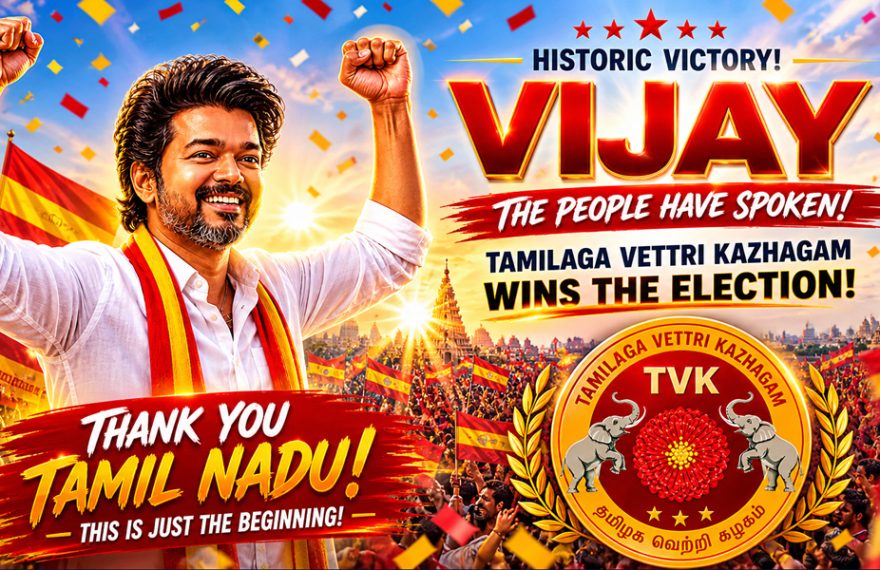
Chennai: Tamil Nadu has entered a high-voltage political phase after the 2026 Assembly election produced a fractured mandate, placing Vijay and his party Tamilaga Vettri Kazhagam at the center of intense government formation efforts.

In a surprising outcome, TVK has emerged as the single largest party, securing around 108 seats in the 234-member Assembly. However, the party remains short of the 118 seats required for a simple majority, leading to a hung Assembly and triggering rapid political negotiations across party lines.

The results have significantly altered Tamil Nadu’s traditional political dynamics, long dominated by the Dravida Munnetra Kazhagam and All India Anna Dravida Munnetra Kazhagam. While both major Dravidian parties remain influential, neither has secured enough seats to independently stake claim to form the government this time.

Following the results, Chief Minister M. K. Stalin submitted his resignation, acknowledging the verdict and paving the way for the formation of a new government. The DMK alliance, which governed the state in the previous term, fell short despite retaining a considerable vote base.

The AIADMK, led by Edappadi K. Palaniswami, also improved its tally compared to earlier expectations but was unable to bridge the gap needed to take power. The party continues to hold influence in several regions but now faces the challenge of redefining its strategy in a rapidly evolving political environment.

Amid this uncertainty, the Indian National Congress has made a notable move by openly congratulating Vijay on his party’s performance. Senior leader Rahul Gandhi is reported to have personally reached out, praising the strong debut of TVK and emphasizing the importance of respecting the people’s mandate.

This development has sparked widespread speculation about a possible Congress–TVK alliance, either through direct participation in government or external support. Political observers suggest that such a move could help TVK cross the majority mark and stabilize governance in the state.

At the same time, smaller regional parties and independent legislators have gained renewed importance. Their support is expected to play a decisive role in determining who forms the next government. Discussions are ongoing behind closed doors, with multiple scenarios being explored, including coalition arrangements and issue-based support.

TVK leaders have indicated that the party is actively assessing its options and is committed to forming a stable administration. A formal claim to form the government is expected once sufficient backing is secured. However, the timeline remains tight, as constitutional procedures require clarity on majority support within a limited period.

The current situation presents several possible outcomes. Vijay could secure alliances and take oath as Chief Minister, marking a historic political transition. Alternatively, if no grouping manages to demonstrate a clear majority, the Governor may invite other alliances to attempt government formation. In a more uncertain scenario, the state could even face fresh elections.

What Lies Ahead

The coming days are expected to be crucial for Tamil Nadu politics. Alliance decisions, leadership negotiations, and strategic compromises will determine the immediate future of the state’s governance.

In Summary:
The 2026 election has reshaped Tamil Nadu’s political landscape, ending the dominance of traditional power structures—at least for now—and positioning Vijay as the central figure in the battle for power. Whether this momentum translates into governance will depend entirely on how the alliance equations unfold in the days ahead.


International

US Submarine Strike on Iranian Warship Near Sri Lanka: What We Know

Prathiban DC 

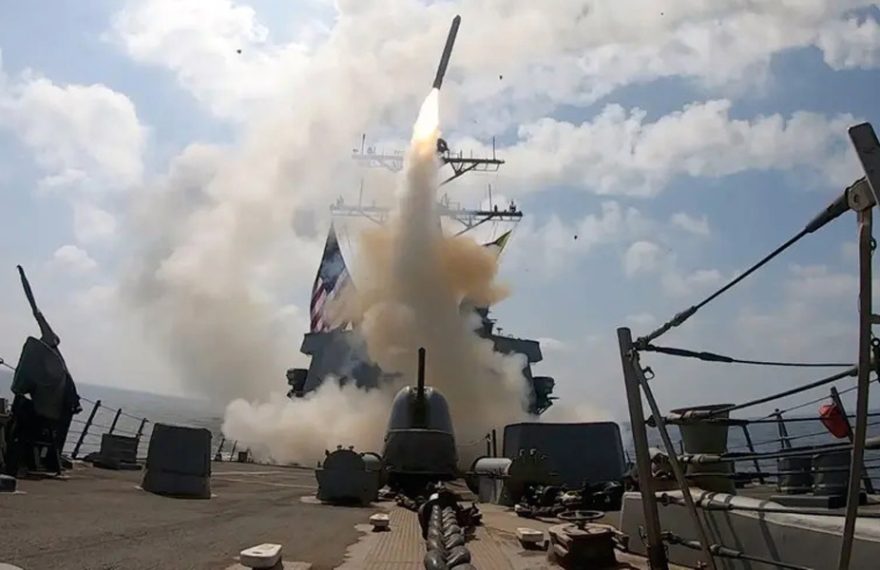
Tensions in international waters intensified after reports confirmed that a United States Navy submarine struck and sank an Iranian naval vessel near the southern coast of Sri Lanka. The incident, which reportedly occurred close to the port city of Galle, has raised fresh concerns about escalating military friction involving Iran and the United States.

According to officials in Washington, the Iranian ship involved was the IRIS Dena, a warship believed to be operating in the Indian Ocean region at the time of the attack. United State defense authorities stated that the submarine engagement was a deliberate military action carried out in international waters. The Pentagon has not disclosed operational details such as the exact submarine involved or the weapons used, but sources indicate that torpedoes were deployed.

Sri Lankan authorities confirmed that a distress signal was received from the damaged vessel, prompting an immediate search-and-rescue operation. Naval and emergency teams from Sri Lanka rushed to the scene and managed to rescue several crew members. Initial reports suggest that roughly 180 personnel may have been onboard the Iranian ship. More than 30 survivors have reportedly been hospitalized in Galle, while many others remain unaccounted for, raising fears of significant casualties.

The United States maintains that the strike was conducted within the framework of ongoing regional security operations amid heightened tensions with Iran. However, Iranian officials have strongly condemned the incident, describing it as an act of aggression and warning of potential consequences. Tehran has not yet released a full casualty figure but has indicated that investigations are underway.

Security analysts note that this development marks a rare instance of a modern naval vessel being sunk by submarine action in a real-world conflict scenario, underscoring the seriousness of the current geopolitical climate. Maritime observers are also closely watching commercial shipping lanes in the Indian Ocean and nearby regions, as any escalation could disrupt vital global trade routes.

Sri Lanka has so far positioned itself strictly in a humanitarian role, focusing on rescue and medical support for survivors. The government has not indicated any military involvement.

The situation remains fluid, with diplomatic channels expected to become active in the coming days.

International observers warn that further escalation between Washington and Tehran could have broader implications for regional stability, energy markets, and maritime security.

International

Greenland Row Sends Shockwaves Through US-European Trade Ties

New Trade Confrontation
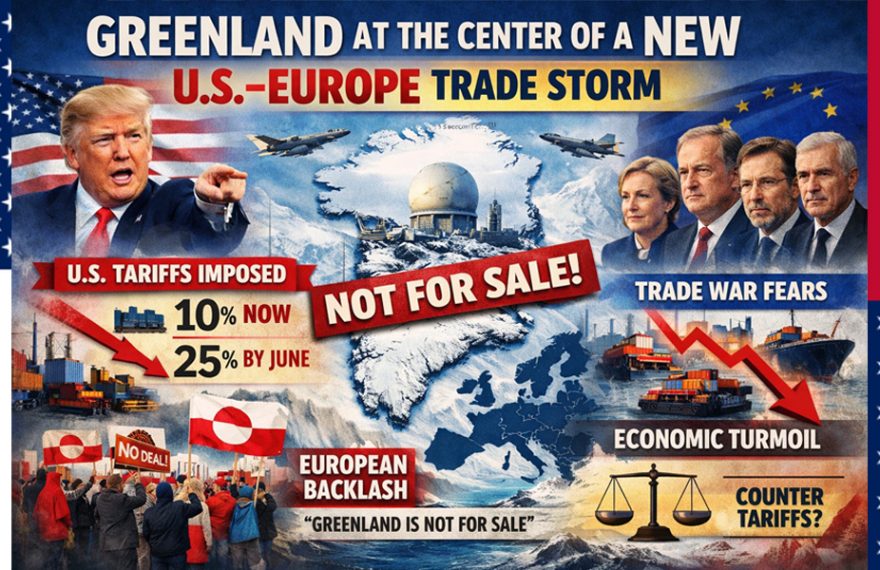
Tensions between the United States and several European countries have intensified after Washington announced new trade tariffs linked to a growing diplomatic dispute over Greenland, a semi-autonomous Arctic territory governed by Denmark.

The U.S. administration has confirmed that it will impose additional import duties on goods coming from eight European nations, including Denmark, the United Kingdom, Germany, France, Sweden, Norway, Finland and the Netherlands. The initial tariff rate is set at 10 percent, with a warning that it could rise sharply in the coming months if negotiations fail.

According to U.S. officials, the decision is tied to national security concerns surrounding Greenland’s strategic location in the Arctic region. The island is seen as increasingly important due to rising geopolitical competition, expanding military interests, and its proximity to key Arctic shipping routes and missile-defence zones.

However, European leaders have strongly rejected Washington’s approach, calling the use of tariffs political pressure through trade. Denmark and Greenland’s local government have reiterated that Greenland’s future is not open to external negotiation and that any decision regarding the territory lies solely with its people.

The European Union has responded by signalling unity among member states and warning that counter-measures are being considered if the tariffs are implemented. Officials have also expressed concern that the move could undermine existing trade agreements and strain long-standing transatlantic partnerships.

Greenland’s leadership has taken a firm public stance, stating that the island is not for sale and that its political status is based on democratic self-determination. Public demonstrations and official statements from Greenland have reinforced opposition to any foreign control.

The dispute has already begun to impact broader diplomatic relations. Planned trade discussions between the U.S. and the European Union have slowed, and global markets are watching closely for signs of escalation. Analysts warn that continued tensions could lead to a wider trade confrontation at a time when global economic stability remains fragile.

Despite the sharp rhetoric, both sides have left the door open for dialogue. European diplomats have called for diplomacy over confrontation, while U.S. officials insist negotiations remain possible if security concerns are addressed.

As the tariff deadline approaches, the Greenland issue has emerged as more than a regional disagreement – it now represents a significant test of U.S.–European relations and the future balance between security, sovereignty, and global trade.

International

Pope Leo Concludes Holy Year, Calls for Compassion Towards Migrants and the Marginalised

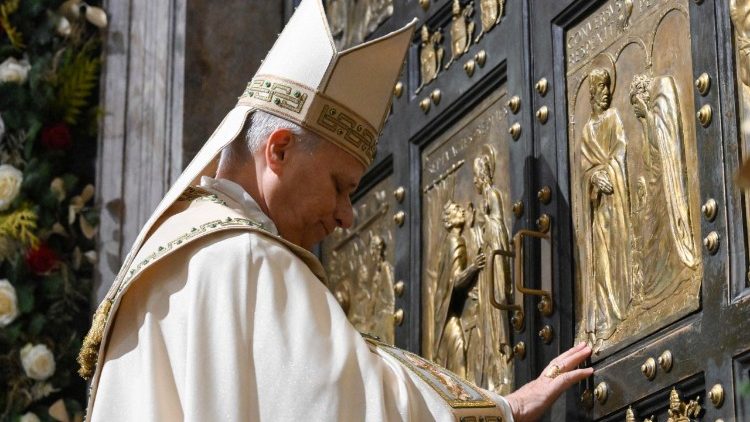
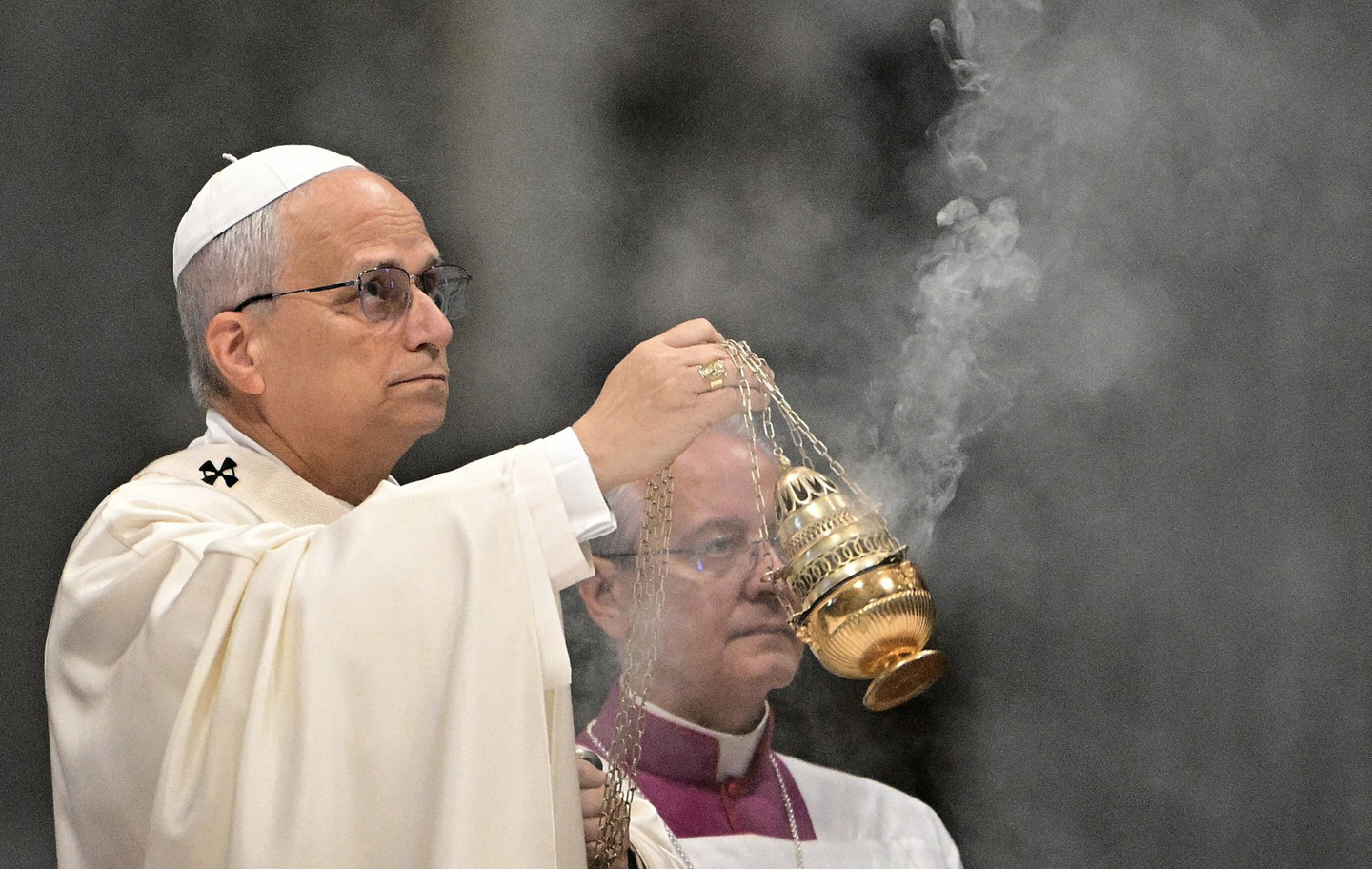
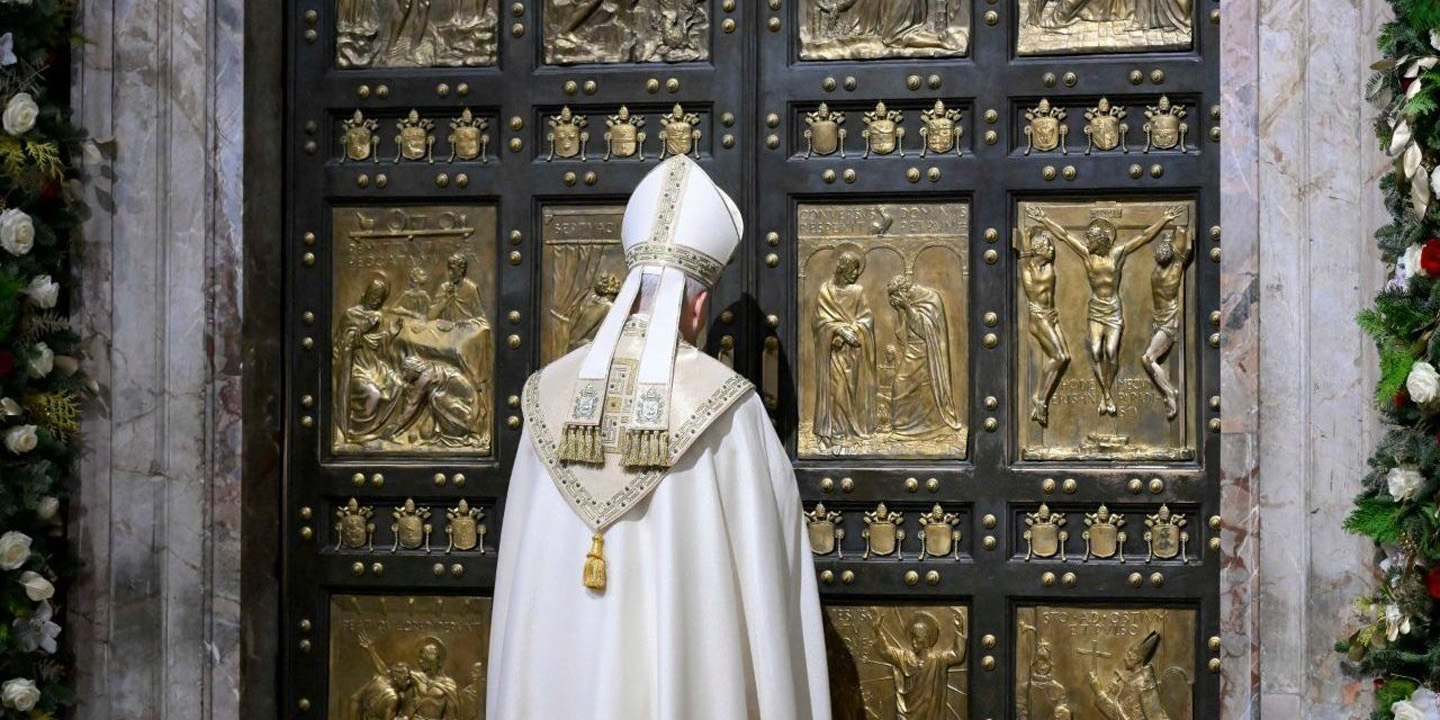
VATICAN CITY: Pope Leo closed the Catholic Church’s Holy Year on Tuesday by sealing shut the special “Holy Door” in St.Peter’s Basilica and urging Christians worldwide to help those in need and treat foreigners with kindness.

Leo, who has made care for immigrants a central theme of his early papacy, said at a Vatican ceremony that the record 33.5 million pilgrims who visited Rome during the Holy Year should have learned not to treat humans as mere “products”.

“Around us, a distorted economy tries to profit from everything,” said the pope. “After this year, will we be better able to recognise a pilgrim in the visitor, a seeker in the stranger, a neighbour in the foreigner?”

Holy years, or jubilees, typically occur every 25 years and are considered a time of peace, forgiveness and pardon. Pilgrims to Rome can enter special “Holy Doors” at four Rome basilicas, and can attend papal audiences throughout the year.

At 9:41 a.m. (0841 GMT) on Tuesday, Leo, dressed in gold-trimmed robes, pulled shut the special bronze door at St. Peter’s, officially ending the year.

The next jubilee is not expected before 2033, when the Church may have a special one to mark 2,000 years since the death of Jesus.

Vatican and Italian officials said on Monday that pilgrims to Rome for the 2025 jubilee came from 185 countries, with Italy, the United States, Spain, Brazil and Poland leading the pack.

The 2025 jubilee was marked by an historical rarity not seen for 300 years. It was opened by one pope, Francis, and closed by his successor, Leo.

Francis died in April after 12 years leading the 1.4-billion-member Church. The last jubilee held under two popes was in the year 1700, when Clement XI closed a holy year opened by Innocent XII.

Leo, who has pledged to keep Francis’ signature policies such as welcoming gay Catholics and discussing women’s ordination, echoed the late pope’s frequent criticisms of the global economic system on Tuesday.

Leo, the first U.S. pope, lamented that the markets “turn human yearnings of seeking, travelling and beginning again into a mere business.”

International

Zohran Mamdani Sworn In as New York’s First Muslim Mayor Takes Oath with Hand on the Quran

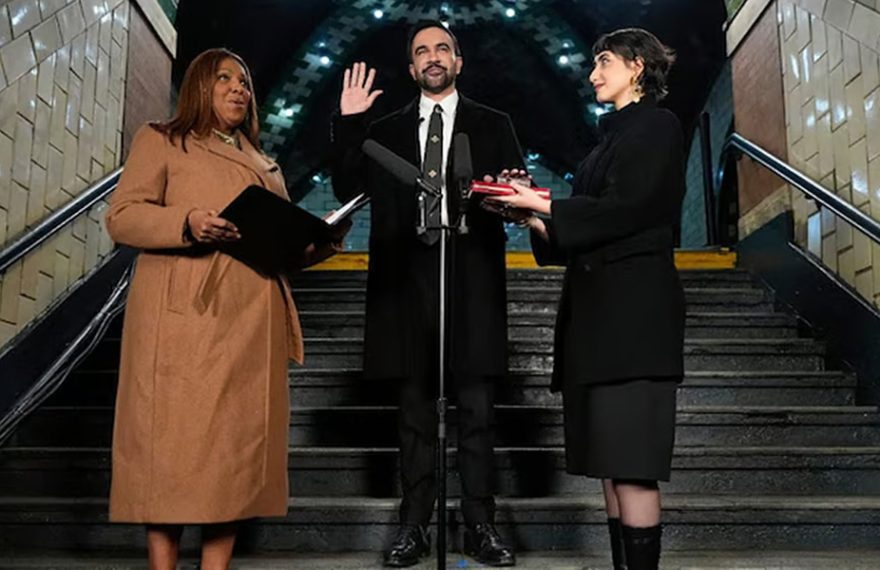
Washington: Zohran Mamdani, 34, was sworn in as the Mayor of New York City early Thursday morning. A young left-wing leader, Mamdani has assumed office as mayor of America’s largest city for a four-year term.

In a historic ceremony held at a subway station in Manhattan, Mamdani took the oath of office as the new Mayor of New York City. The Indian-origin Democrat made history by becoming the city’s first Muslim mayor. During the swearing-in ceremony, he placed his hand on the Quran, a moment that drew significant attention.
“This is truly the greatest honor of my life,” Mamdani said.

Later in the day, at 1 p.m. local time, he will take the oath once again in a grand public ceremony at City Hall. The oath will be administered by U.S. Senator Bernie Sanders, one of Mamdani’s political mentors. Following the ceremony, the new administration will host a public block party along Broadway, popularly known as the “Canyon of Heroes,” a location famous for ticker-tape parades.

Born in Uganda and raised in New York City, Mamdani is currently one of the most closely watched politicians in the country. He previously served as a member of the New York State Assembly. According to the Associated Press, he is the first Muslim, the first person of South Asian descent, and the first individual of African origin to hold that position.

International

Two Suspects in Osman Hadi Murder Escape to India via Meghalaya Border: Dhaka Police

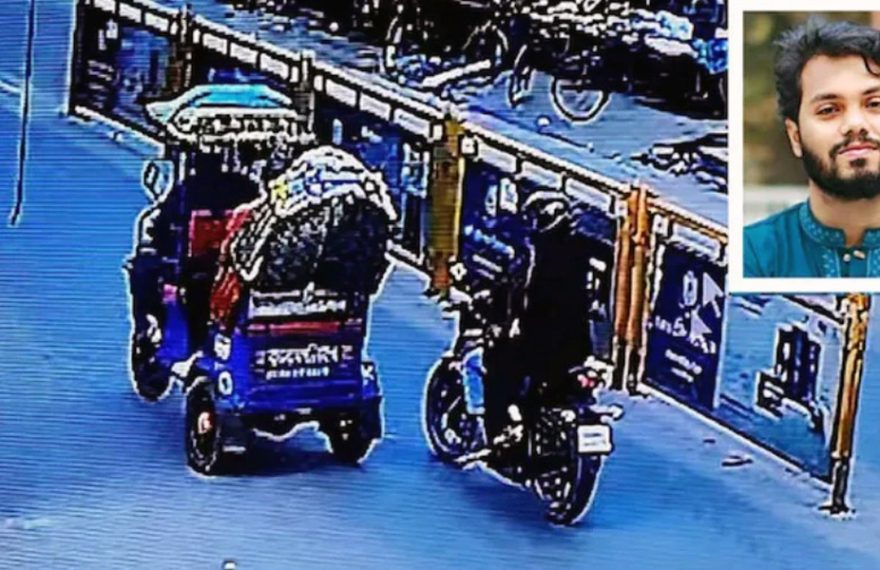
Two key suspects in the killing of Bangladeshi political activist Osman Hadi escaped to India through the Meghalaya border following the attack, according to the Dhaka Metropolitan Police. As reported by The Daily Star, authorities revealed this information during a press briefing at the DMP Media Centre.

Additional Commissioner SN Nazrul Islam said the suspects—Faisal Karim Masud and Alamgir Sheikh—crossed into India via the Haluaghat border in the Mymensingh region with assistance from local collaborators. After entering India, they were reportedly received by a person identified as Purti, before being taken by a taxi driver named Sami to Tura town in Meghalaya.

Nazrul Islam stated that police have received informal information indicating that the individuals who helped the suspects may have been detained by Indian authorities, though official confirmation is still awaited. He added that Bangladeshi law enforcement agencies are in constant contact with their Indian counterparts through both formal and informal channels to facilitate the suspects’ arrest and extradition.

Osman Hadi was a well-known political leader, a strong critic of India and the Awami League, and a prominent figure in last year’s violent student-led protests, referred to as the July Uprising, which culminated in the downfall of the Sheikh Hasina-led government. After the uprising, Hadi formed a political platform called Inqilab Mancha and was preparing to contest the parliamentary elections scheduled for February.

Hadi was shot in the head by unidentified assailants in Dhaka on December 12. He was later airlifted to Singapore for medical treatment, where he succumbed to his injuries six days later.

His death sparked widespread unrest across Dhaka and other regions of Bangladesh. Mobs attacked and set fire to the offices of leading newspapers Prothom Alo and The Daily Star, as well as cultural organisations such as Chhayanat and Udichi Shilpi Goshthi. The violence also spread to central Bangladesh, where a Hindu factory worker was lynched by a mob in Mymensingh, further intensifying tensions in the aftermath of Hadi’s killing.

International

Bangladesh’s Next Prime Minister? Tarique Rahman’s Return Set to Redefine the Nation’s Politics

Prathiban DC
Editor 

Bangladesh is preparing for the return of Bangladesh Nationalist Party (BNP) leader Tarique Rahman, who is set to come home after 17 years in exile. His arrival marks a critical moment for the election-bound nation, as the comeback of the BNP’s acting chairman is expected to significantly reshape the country’s political landscape.

Tarique Rahman is the son of former President Ziaur Rahman and former Prime Minister Khaleda Zia. His return comes at a time when Khaleda Zia, the BNP chairperson, has largely withdrawn from active politics due to declining health. In her absence, Tarique has led the party from abroad while facing a series of legal challenges.

During the tenure of former Prime Minister Sheikh Hasina, courts convicted Rahman in multiple cases, including corruption, bribery, money laundering, illegal accumulation of wealth, and involvement in grenade attacks. However, following the collapse of the Hasina government, these legal barriers have been removed, clearing the path for his political comeback.

Although Rahman was expected to return to Bangladesh in November, reports suggest his arrival was delayed by more than a month due to prevailing security concerns in the country.

Firm Foreign Policy Stance
Tarique Rahman is widely regarded as holding a strong anti-India position and has openly expressed his views on foreign policy matters, including the long-pending Teesta water-sharing dispute. At the same time, he has distanced himself from pursuing close ties with Pakistan. “Not Delhi, not Pindi, nor any other country. Bangladesh first,” Rahman stated in May, months after the fall of the Hasina government.

His return coincides with a sensitive period, as radical Islamic groups have been accused of fueling unrest and instability across the country.

Political Realignment Ahead of Elections
For decades, Bangladesh’s politics has largely been dominated by two major parties—the Awami League led by Sheikh Hasina and the BNP founded by Khaleda Zia. With the Awami League now barred from participating in elections, the political space has opened up for the BNP’s resurgence.

However, radical political groups are reportedly attempting to delay the electoral process in a bid to weaken the BNP’s support base and expand their own influence.

If the BNP secures victory in the upcoming elections, Tarique Rahman could emerge as the next Prime Minister. Positioning himself as a champion of democratic restoration, Rahman has already unveiled his campaign roadmap and policy agenda. Addressing party workers at a recent event, he asserted that “only democracy can pull the country out of this crisis,” urging BNP members to strengthen democratic institutions.

As Bangladesh stands at a political crossroads, Tarique Rahman’s return is widely seen as a development that could redefine the country’s future trajectory.