Home Archive by category National

National

Cinema National

Veteran Producer R. B. Choudary Passes Away in Road Accident

Prathiban DC

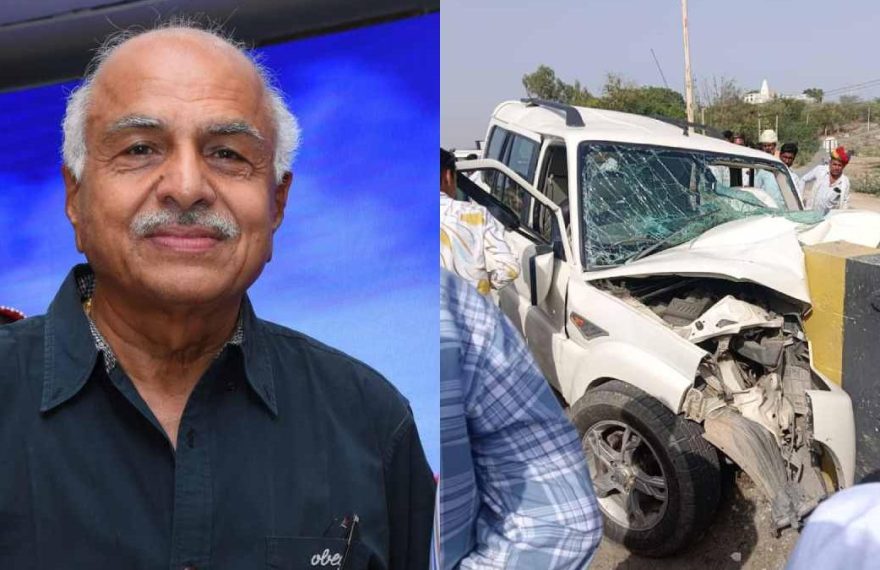
The Indian film industry is mourning the sudden loss of veteran producer R. B. Choudary, who passed away on May 5, 2026, following a tragic road incident in Rajasthan. His unexpected demise has left fans, colleagues, and the entire cinema fraternity in shock.

According to initial information, the accident took place while he was traveling through the state. Though reports suggest that the physical injuries from the crash were not severe, the incident is believed to have caused a cardiac arrest, which ultimately led to his death. Authorities are expected to release further details as investigations continue.

B. Choudary was a towering figure in Indian cinema, particularly known for his contributions to South Indian films. Over the course of his long and successful career, he produced numerous films across Tamil, Telugu, Malayalam, and Hindi languages. His work consistently connected with audiences, blending strong storytelling with commercial appeal.

He was the founder of Super Good Films, a production house that became widely recognized for delivering hit films with family-oriented themes. Many of his projects went on to achieve both box office success and lasting popularity among viewers. Films produced under his banner often featured emotional depth, relatable characters, and engaging narratives.

Starting his professional journey outside the film world, Choudary was initially involved in business ventures such as steel and exports. However, his passion for cinema led him to enter the film industry in the late 1980s. From there, he steadily built a reputation as a dependable and visionary producer.

Throughout his career, he played a significant role in supporting and promoting talent within the industry. Several actors and filmmakers benefited from opportunities under his banner, helping shape their careers. His contributions extended beyond just producing films—he was also known for encouraging new ideas and backing promising talent.

Over the years, his films received multiple recognitions and awards, highlighting his consistent contribution to Indian cinema. His ability to produce successful films across different languages made him a respected figure nationwide, even before the concept of pan-Indian cinema became widely popular.

On the personal front, R. B. Choudary is survived by his family, including his sons, among whom Jiiva and Jithan Ramesh are well-known in the entertainment industry. His family has played an active role in continuing his legacy in both cinema and business.

Following the news of his passing, tributes have been pouring in from across the film fraternity. Actors, directors, and fans have expressed their condolences, remembering him as a dedicated producer and a guiding figure in the industry. Many have highlighted his humility, work ethic, and long-standing impact on cinema.

The loss of R. B. Choudary marks the end of an era for many in the industry. His influence, however, will continue through the films he created and the people he inspired. His body of work remains a testament to his vision and commitment to storytelling.

Details regarding his final rites and memorial services are expected to be announced soon by the family.

His passing is not just a loss to his loved ones, but to the entire Indian film industry, which he helped shape over decades of dedication and hard work.

International National

108 Seats, One Big Question: Will Vijay Form the Government?

Prathiban DC

Chennai: Tamil Nadu has entered a high-voltage political phase after the 2026 Assembly election produced a fractured mandate, placing Vijay and his party Tamilaga Vettri Kazhagam at the center of intense government formation efforts.

In a surprising outcome, TVK has emerged as the single largest party, securing around 108 seats in the 234-member Assembly. However, the party remains short of the 118 seats required for a simple majority, leading to a hung Assembly and triggering rapid political negotiations across party lines.

The results have significantly altered Tamil Nadu’s traditional political dynamics, long dominated by the Dravida Munnetra Kazhagam and All India Anna Dravida Munnetra Kazhagam. While both major Dravidian parties remain influential, neither has secured enough seats to independently stake claim to form the government this time.

Following the results, Chief Minister M. K. Stalin submitted his resignation, acknowledging the verdict and paving the way for the formation of a new government. The DMK alliance, which governed the state in the previous term, fell short despite retaining a considerable vote base.

The AIADMK, led by Edappadi K. Palaniswami, also improved its tally compared to earlier expectations but was unable to bridge the gap needed to take power. The party continues to hold influence in several regions but now faces the challenge of redefining its strategy in a rapidly evolving political environment.

Amid this uncertainty, the Indian National Congress has made a notable move by openly congratulating Vijay on his party’s performance. Senior leader Rahul Gandhi is reported to have personally reached out, praising the strong debut of TVK and emphasizing the importance of respecting the people’s mandate.

This development has sparked widespread speculation about a possible Congress–TVK alliance, either through direct participation in government or external support. Political observers suggest that such a move could help TVK cross the majority mark and stabilize governance in the state.

At the same time, smaller regional parties and independent legislators have gained renewed importance. Their support is expected to play a decisive role in determining who forms the next government. Discussions are ongoing behind closed doors, with multiple scenarios being explored, including coalition arrangements and issue-based support.

TVK leaders have indicated that the party is actively assessing its options and is committed to forming a stable administration. A formal claim to form the government is expected once sufficient backing is secured. However, the timeline remains tight, as constitutional procedures require clarity on majority support within a limited period.

The current situation presents several possible outcomes. Vijay could secure alliances and take oath as Chief Minister, marking a historic political transition. Alternatively, if no grouping manages to demonstrate a clear majority, the Governor may invite other alliances to attempt government formation. In a more uncertain scenario, the state could even face fresh elections.

What Lies Ahead

The coming days are expected to be crucial for Tamil Nadu politics. Alliance decisions, leadership negotiations, and strategic compromises will determine the immediate future of the state’s governance.

In Summary:
The 2026 election has reshaped Tamil Nadu’s political landscape, ending the dominance of traditional power structures—at least for now—and positioning Vijay as the central figure in the battle for power. Whether this momentum translates into governance will depend entirely on how the alliance equations unfold in the days ahead.


National

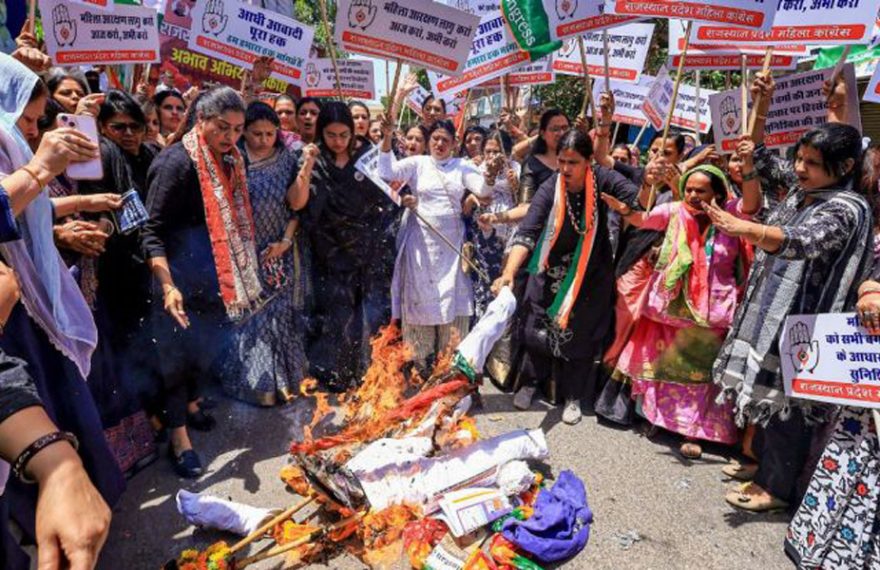
Mahila Congress pushes back on BJP narrative, plans nationwide campaign to clear women’s quota row

Summary: The Mahila Congress has launched a nationwide campaign demanding implementation of the 2023 Women’s Reservation Bill, countering BJP’s “anti-women” claims. Through protests and outreach, it aims to pressure the government. While electoral impact may be limited, the campaign helps mobilise workers and strengthen the party’s position on women’s representation.

The Congress party’s Mahila wing has launched a nationwide campaign demanding the implementation of the Women’s Reservation Bill passed in 2023, which was passed with Congress’ support. The campaign is framed as a counter to the BJP’s narrative that the opposition parties are anti-women, calling it the BJP’s “misleading narrative” on women’s representation.

The Mahila Congress wants to highligh that the government’s recent attempt to pass the law during the special parliamentary session was less about empowering women and more about paving the way for delimitation. With the 2026 effort to implement the bill failing to clear Parliament, the BJP has accused opposition parties of resisting greater representation for women and its women parliamentarians have also come out with placards after the bill failed to pass the parliament test and echoed the party stand.

In response, the Mahila Congress has rolled out a nationwide signature and postcard campaign, alongside protests and press conferences, aimed at building pressure for immediate implementation of the 2023 women reservation bill while directly challenging the BJP’s claims.

“Our press conferences have begun. We have already held protests in Delhi and launched postcard and signature campaigns. This will be an ongoing effort until the bill is implemented-it is going to be a long struggle against the BJP,” said Safia Zuber, General Secretary of the All India Mahila Congress.

The campaign will be coordinated with other frontal organisations, with state units expected to replicate similar mobilisation efforts across the country.

The timing, however, raises political questions. The exercise comes after assembly elections in Kerala and Assam, where the Congress is a principal opposition force, and ahead of polls in West Bengal and Tamil Nadu. In Bengal, the party’s limited organisational presence reduces the potential electoral impact, while in Tamil Nadu it remains a junior partner to the DMK, which largely drives the political narrative.

Analysts suggest the campaign may have limited immediate electoral payoff. “The major contests for the Congress in Assam and Kerala are already over. In West Bengal, its positioning has minimal electoral consequences, and in Tamil Nadu, it will largely play a supporting role to the DMK,” a political observer noted.

Yet, beyond electoral arithmetic, the campaign has given the women’s wing of the party an opportunity to mobilise its cadre, make amends in its organisational functioning, and build a women’s base, apart from trying to counter the BJP’s narrative on the bill. For the Mahila Congress, it offers a platform to energise its cadre and expand its outreach.

Some observers believe the sustained mobilisation could blunt the BJP’s attempt to frame the opposition as anti-women, while equipping Congress workers with political ammunition to contest that claim in public discourse.

National

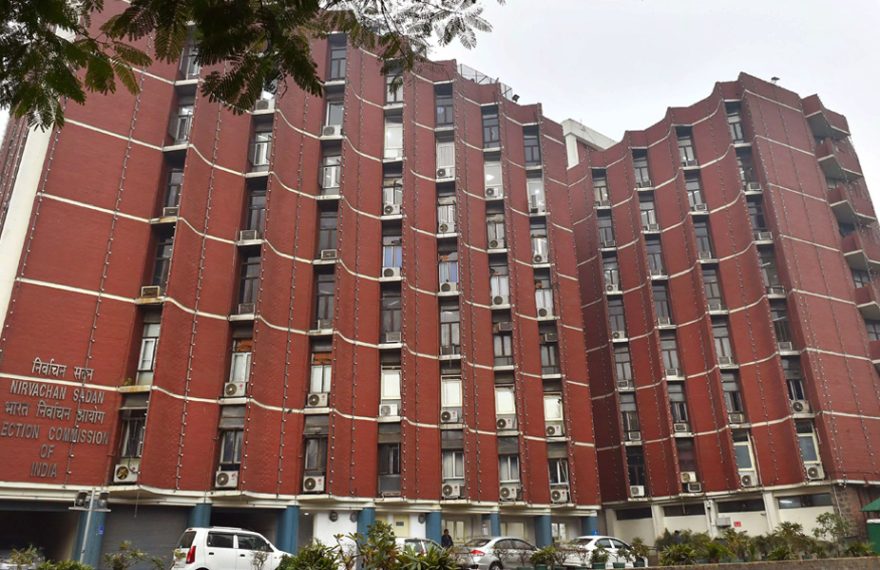
EC Directs 22 States, UTs to Prepare for Special Intensive Revision of Electoral Rolls from April

By Prathiban DC, Editor

The Election Commission of India (ECI) has instructed 22 states and Union Territories to complete preparatory arrangements for the upcoming Special Intensive Revision (SIR) of electoral rolls, which is expected to begin in April.

In an official communication issued on Thursday, the Commission emphasized the urgency of completing groundwork to ensure a smooth rollout of the revision exercise. Once the first phase is completed, the SIR will be implemented across the country.

The directive has been sent to the Chief Electoral Officers of Andhra Pradesh, Arunachal Pradesh, Chandigarh, Dadra and Nagar Haveli & Daman and Diu, Haryana, Himachal Pradesh, Jammu and Kashmir, Jharkhand, Karnataka, Ladakh, Maharashtra, Manipur, Meghalaya, Mizoram, Nagaland, Delhi, Odisha, Punjab, Sikkim, Tripura, Telangana and Uttarakhand.

The Election Commission noted that a nationwide SIR of electoral rolls had already been ordered in June last year as part of efforts to enhance voter roll accuracy and transparency.

So far, the SIR process has been completed in Bihar and is currently underway in nine states and three Union Territories. In Assam, however, the Commission conducted a “special revision” instead of a full SIR, which concluded on February 10.

What is Special Intensive Revision (SIR)?
The Special Intensive Revision is a comprehensive electoral roll update exercise aimed at:

• Removing duplicate and ineligible voters

• Adding newly eligible voters, especially first-time voters

• Updating address and demographic changes

• Ensuring cleaner electoral rolls ahead of major elections

The Election Commission considers SIR crucial for maintaining the integrity of the electoral process, particularly ahead of large-scale national or state polls.

Why Are Opposition Parties Raising Concerns?
Several opposition parties have expressed reservations about the timing and scope of the SIR exercise, citing multiple concerns:

1. Timing Before Elections
Opposition leaders argue that conducting intensive revisions close to key elections could lead to confusion among voters and administrative disruptions. Some claim it may disproportionately affect certain voter groups.

2. Risk of Voter Deletions
There are fears that large-scale roll revisions could result in wrongful deletions of legitimate voters due to documentation errors, migration, or verification gaps — an issue raised in past revision exercises.

3. Allegations of Political Misuse
Some opposition parties have alleged that electoral roll revisions could be misused to selectively target regions where ruling parties face strong competition, though the Election Commission has repeatedly denied such claims.

4. Transparency and Verification Concerns
Critics are demanding greater transparency in the verification process, including clearer guidelines on data matching, field verification, and grievance redressal for voters whose names are removed.

5. Precedents in Certain States
Opposition leaders have pointed to past controversies over voter roll revisions in some states, where large numbers of deletions led to legal and political disputes.

EC’s Stand
The Election Commission has maintained that the SIR is a routine and legally mandated exercise aimed solely at ensuring free and fair elections. It has reiterated that safeguards, including public verification, claims and objections windows, and appeals mechanisms, will be in place to prevent wrongful exclusions.

National

Election Commission part of ‘vote theft’ plot, not guardian of democracy: Rahul Gandhi

New Delhi: Congress leader and Leader of Opposition in the Lok Sabha Rahul Gandhi on Saturday accused the Election Commission of India (ECI) of playing an active role in a “well-planned and organised vote theft” under the guise of the Special Intensive Revision (SIR) of electoral rolls, particularly in Gujarat.

Gandhi alleged that the SIR process has been deliberately turned into a tool to undermine the constitutional principle of “one person, one vote”, allowing the BJP to determine electoral outcomes rather than the electorate. He claimed that wherever SIR has been implemented, instances of vote manipulation have followed.

Posting in Hindi on X, Gandhi said the exercise being carried out in Gujarat is not a routine administrative procedure but a strategic operation aimed at disenfranchising voters. He described it as a systematic attempt to remove voters selectively from communities and polling booths perceived to support the Congress.

Calling the situation “shocking and dangerous”, Gandhi alleged that thousands of objections were filed under the same names, pointing to large-scale irregularities. He further claimed that voters were deliberately deleted in areas where the BJP anticipated electoral defeat.

He said similar patterns were previously witnessed in Aland and Rajura, and alleged that the same “blueprint” is now being replicated in Gujarat, Rajasthan, and other states where SIR is underway. According to Gandhi, the Election Commission has ceased to function as an independent constitutional authority and has instead become a participant in what he termed a conspiracy to steal votes.

Gandhi’s remarks followed a social media post by the Gujarat Congress, which alleged that after his exposure of vote manipulation, the BJP adopted a more advanced model of election rigging. The party claimed that the ECI, after releasing the draft electoral rolls post-SIR, invited objections with January 18 as the deadline. While only a limited number of objections were received initially, the Congress alleged that millions of objections-mainly through Form 7-were suddenly submitted in the final phase as part of a coordinated plan.

According to the Gujarat Congress, when the Election Commission released data showing 1.2 million objections, it became evident that electoral rules were being violated to target specific castes, communities, and regions. The party alleged that multiple objections were filed under the name of a single individual with varying signatures, while the ECI failed to intervene.

The Congress also claimed that despite writing to the Election Commission seeking details about the objections, it received no response, which, it said, exposed the extent of election manipulation. The party accused the ECI of surrendering its independence, responsibility, and accountability to the ruling BJP.

National

‘Persistent confusion’ over Karnataka CM post; Siddaramaiah seeks meeting with Rahul Gandhi

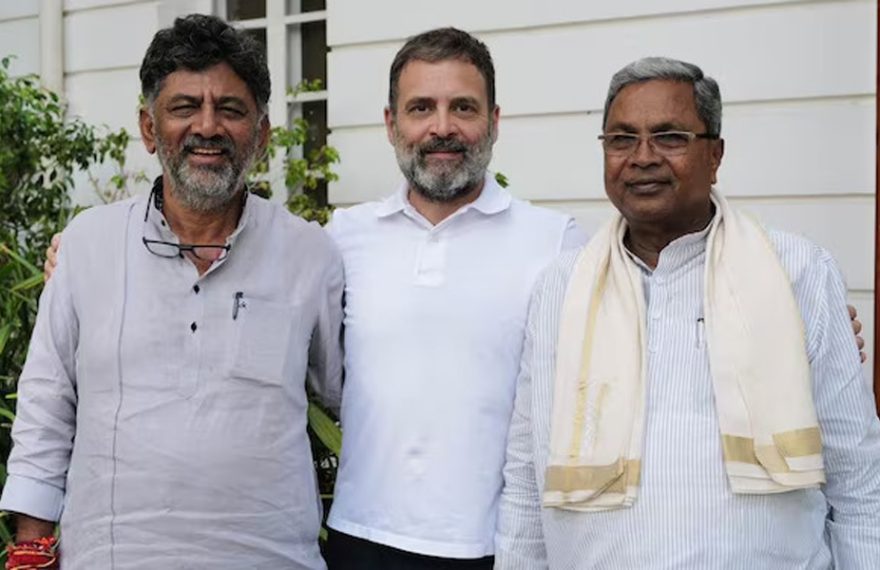
Karnataka Chief Minister Siddaramaiah has sought clarity from senior Congress leader Rahul Gandhi, citing “persistent confusion” surrounding leadership speculation in the state, sources said.

According to party sources, Siddaramaiah expressed his desire to expand the state Cabinet and requested a meeting with Rahul Gandhi amid renewed rumours of a possible leadership change in Karnataka.

The development comes even as the Congress high command has repeatedly dismissed reports of internal discord within the party’s Karnataka government. Speculation over a power struggle between Siddaramaiah and Deputy Chief Minister D.K. Shivakumar has continued to surface despite consistent denials from both leaders.

Last month, Congress president Mallikarjun Kharge downplayed reports of leadership tension, stating that there was no confusion at the level of the party’s central leadership. “The high command has not created any confusion,” Kharge had said, adding that any internal matters should be addressed by the state leadership.

Kharge also cautioned party leaders against claiming individual credit for the Congress’ electoral victory in Karnataka, stressing that the party’s success was the result of decades of collective effort by its workers.

Both Siddaramaiah and Shivakumar have firmly rejected claims of discord. Siddaramaiah has reiterated that he enjoys the confidence of the party leadership and will complete his full five-year term, dismissing speculation about a rotational chief minister arrangement.

Shivakumar, too, has termed reports of rifts as media speculation and opposition propaganda. “Aren’t the Chief Minister and I working like brothers? I have no differences with any Congress leader,” he had said earlier, adding that any decision on leadership would be taken by the party high command at an appropriate time and would be accepted by all.

The speculation largely revolves around an alleged internal understanding that Siddaramaiah and Shivakumar would each serve as Chief Minister for 2.5 years. Siddaramaiah was sworn in on May 20, 2023, and a leadership change was widely anticipated around November last year when the government crossed the halfway mark of its term. When no such change occurred, some MLAs considered close to Shivakumar reportedly travelled to Delhi to press their demands.

However, the Congress has repeatedly denied the existence of any power-sharing agreement and has maintained that Siddaramaiah will complete the full term as Chief Minister.

Responding to reports of MLAs visiting Delhi, Shivakumar said factionalism was not in his nature and reaffirmed his support for Siddaramaiah’s continuation. “All 140 MLAs are my MLAs. Groupism is not in my blood. Both the Chief Minister and I have always said we abide by the high command,” he stated.

He also noted that it was natural for legislators to meet the party leadership to seek positions ahead of a possible Cabinet reshuffle.

Meanwhile, the BJP has continued to target the Karnataka Congress leadership, alleging that the ruling party is consumed by an internal power struggle between Siddaramaiah and Shivakumar instead of focusing on governance.

National

Delhi Demolition Drive Turns Violent: FIR Registered, Five Held as Police Probe Possible Conspiracy

The Delhi Police on Wednesday (January 7, 2026) registered an FIR and detained five individuals following violence that broke out during an anti-encroachment operation near the Syed Faiz Elahi Mosque in the Ramlila Maidan area, officials said.

The clash occurred when the Municipal Corporation of Delhi (MCD) was carrying out a court-ordered demolition on land adjacent to the mosque and a nearby graveyard. During the operation, a group of people allegedly hurled stones and glass bottles at police personnel, injuring at least five officers.

To bring the situation under control and disperse the crowd, police fired tear gas shells. Five persons were taken into custody for questioning and their involvement is being verified through CCTV footage.

Police officials said investigations are underway to determine whether the violence erupted spontaneously or was a premeditated attempt to obstruct the demolition drive. Efforts are also on to identify other suspects involved in the stone-pelting incident.

Footage Under Scrutiny
Senior officers confirmed that CCTV recordings and videos circulating on social media are being closely examined to identify those responsible. Statements of witnesses and the detained individuals are also being recorded as part of the probe.

The FIR has been registered under multiple sections of the Bharatiya Nyaya Sanhita, including charges related to obstructing public servants, assault to deter officials from duty, causing hurt, rioting, disobedience of lawful orders, and joint liability, along with provisions of the Prevention of Damage to Public Property Act, 1984.

Mosque Unaffected
An MCD official clarified that the Syed Faiz Elahi Mosque was not damaged during the demolition process. The civic body stated that the drive was conducted strictly in compliance with directions issued by the Delhi High Court.

As part of the large-scale operation, nearly 30 bulldozers and 50 dumpers were deployed, with over 300 MCD workers and officials engaged in clearing encroachments and removing debris. The demolition continued through the night and led to the removal of extensive illegal structures identified by the court.

Police said adequate law and order arrangements remain in place in the area as a precaution. “The situation is under control and normalcy has been restored,” a senior officer said, adding that stringent legal action will be taken against all those found responsible. Further investigation is ongoing.

National

Why the Latest Surrender in Telangana May Signal the ‘End of the Maoist Movement in Chhattisgarh’

Barsa Deva, a senior commander of the People’s Liberation Guerrilla Army (PLGA) Battalion 1, is set to surrender before Telangana Director General of Police (DGP) B Shivadhar Reddy, along with several other Maoist cadres.

According to police officials, multiple Maoists — including Barsa Deva, also known as Barsa Sukka – will lay down arms before the Telangana police chief on Saturday. His surrender is being viewed as a major setback to the Maoist movement in Chhattisgarh.

“This effectively marks the end of the Maoist chapter in Sukma district, the stronghold of Madvi Hidma and his feared associate Barsa Deva,” Telangana DGP B Shivadhar Reddy told. He added that with Hidma killed last year and Deva now surrendering, the Maoist movement in Chhattisgarh has reached its final phase.

Deva is expected to surrender along with his personal security detail and 18 cadres. The DGP said sustained pressure from security forces, including Telangana’s anti-Maoist units, led Deva to agree to surrender.

“With the elimination of Hidma and the surrender of Deva, there is no leadership left to continue violent Maoist activities,” Reddy said.

The surrender follows outreach efforts by Chhattisgarh Deputy Chief Minister and Home Minister Vijay Sharma, who had met the families – particularly the mothers – of both Hidma and Deva, urging them to persuade Deva to give up arms. Sharma noted that Hidma had ignored similar appeals, which ultimately resulted in his death in an encounter.

Hailing from the same village, Puvarti, Hidma and Deva were key figures in the Dandakaranya region. Deva, a member of the Dandakaranya Special Zonal Committee and a senior leader of the banned CPI (Maoist), was among the most wanted Maoist commanders. He is accused of orchestrating multiple attacks on security forces, including the deadly ambush on Congress leaders in Sukma district in May 2013, and carried a bounty exceeding Rs.50 lakh.

Officials believe Deva’s surrender will further cripple an already weakened Maoist network, which has seen a series of surrenders and encounter deaths over the past year. Hidma was killed in an encounter in the Maredumilli forest of Andhra Pradesh’s Alluri Sitarama Raju district.

Appealing to remaining Maoist leaders, the Telangana DGP urged them to surrender and take advantage of rehabilitation schemes, noting that Telangana’s surrender policy has also been adopted by other states.

With Deva now giving up arms, only a handful of senior Maoist leaders remain underground. Among them is Thippiri Tirupathi, alias Devuji – the general secretary of the banned CPI (Maoist) – who is currently absconding and being pursued by security forces across Chhattisgarh, Odisha, Telangana, and Andhra Pradesh.

National

Maharashtra Civic Polls: Mahayuti Secures 68 Seats Unopposed as Nominations Withdrawn

The BJP-led Mahayuti alliance has gained a major early edge in the Maharashtra civic elections, with 68 candidates elected unopposed even before voting, following the withdrawal of nominations across several urban local bodies. Polling for the civic elections is scheduled for January 15.

The unopposed victories were confirmed after the deadline for nomination withdrawals closed on Friday, as candidates from rival parties exited the fray, paving the way for uncontested wins in multiple municipal bodies across the state.

Of the 68 seats secured without a contest, the BJP alone accounts for 44. A significant number came from the Kalyan-Dombivli Municipal Corporation in Thane district, along with seats in Pune, Pimpri Chinchwad, Panvel, Bhiwandi, Dhule, Jalgaon and Ahilyanagar.

In Pune, BJP candidates Manjusha Nagpure and Shrikant Jagtap were elected unopposed from Ward No. 35 after their opponents withdrew. Both leaders had earlier represented the same ward during the 2017–2022 term.

Union Minister and senior BJP leader Murlidhar Mohol said the unopposed wins reflected public confidence in the party’s governance. He expressed confidence that the next Pune mayor would be from the BJP, noting that the party aims to win 125 seats, with two already secured without contest.

BJP spokesperson Keshav Upadhye said the developments highlighted the party’s growing influence in urban civic institutions across Maharashtra. Party leaders attributed the success to the popularity of Chief Minister Devendra Fadnavis and the electoral strategy led by state BJP president Ravindra Chavan.

However, the Shiv Sena (Uddhav Thackeray faction) criticised the unopposed victories, alleging that democratic processes were being weakened. Party MP Priyanka Chaturvedi accused the BJP of intimidating opposition candidates through central agencies or inducing withdrawals through inducements, and criticised the Election Commission for remaining silent.

Elections to 29 municipal corporations across Maharashtra, including the politically significant Brihanmumbai Municipal Corporation (BMC), will take place on January 15, with vote counting scheduled for the following day.

National

Over 2,900 Attacks on Minorities Reported in Bangladesh Under Muhammad Yunus’ Interim Government: India

India on Friday voiced serious concern over the continued violence against minority communities in Bangladesh, stating that more than 2,900 such incidents have been recorded during the tenure of the interim government led by Muhammad Yunus. New Delhi called for firm and immediate action against those behind the attacks, including the recent lynching of a Hindu youth in Mymensingh.

Ministry of External Affairs spokesperson Randhir Jaiswal said independent assessments have documented over 2,900 cases of violence targeting minorities such as Hindus, Christians and Buddhists. These incidents reportedly include murders, arson attacks and illegal land seizures. He emphasized that these cannot be dismissed as exaggerated media reports or routine political clashes.

India strongly condemned the killing of Dipu Chandra Das and insisted that all those responsible be held accountable. Bangladeshi authorities have so far arrested 12 individuals in connection with the case. Jaiswal also referred to another recent incident in Rajbari town, where Amrit Mondal, also known as Samrat, was beaten to death by a mob, citing it as further evidence of worsening security and growing hostility towards minorities.

The comments come amid renewed political turbulence in Bangladesh following the killing of youth leader Sharif Osman Hadi, a key figure in last year’s protests that ultimately led to the fall of the Sheikh Hasina government. India firmly rejected attempts by certain sections in Bangladesh to link New Delhi to Hadi’s death, calling such allegations baseless.

Jaiswal said India is closely watching developments in the neighbouring country and reiterated its support for peace, stability and the conduct of free, fair, inclusive and participatory parliamentary elections scheduled for February 12.

Responding cautiously to the return of Bangladesh Nationalist Party’s acting chairman Tarique Rahman to Dhaka after 17 years, India said the development should be seen in the light of its long-standing support for democratic processes in Bangladesh.

India also reaffirmed its commitment to maintaining close and friendly relations with the people of Bangladesh.

Source: Deccan Herald