Home Archive by category Karnataka

Karnataka

Bangalore Karnataka

One in Four Inspected LPG Cylinders Found Underfilled During Karnataka State Crackdown

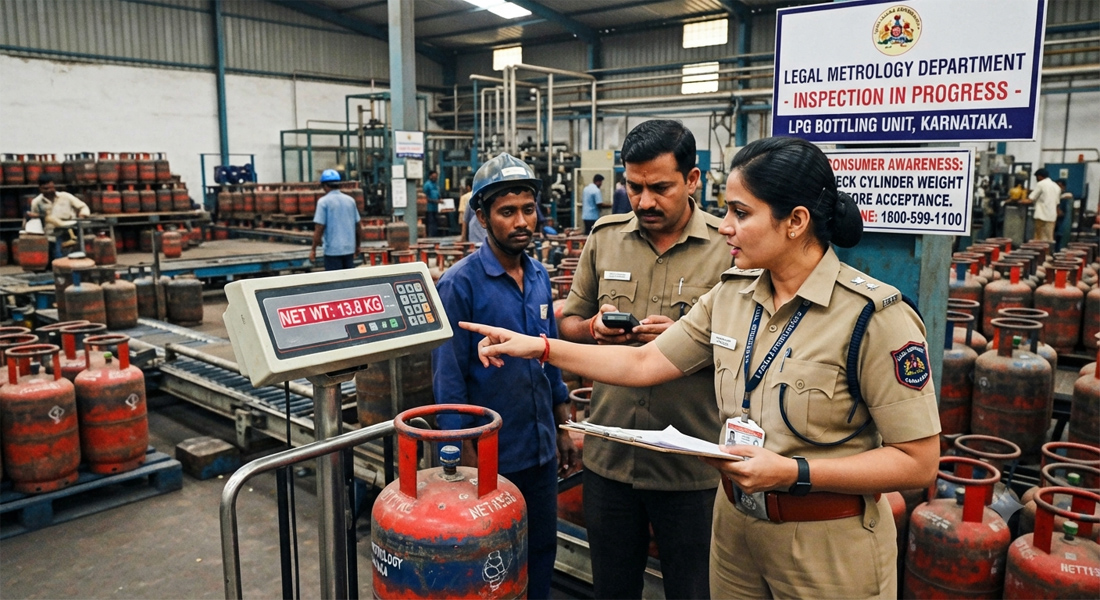
Bengaluru, September 29, 2026: In a striking revelation concerning household consumer rights, recent surprise inspections conducted across Karnataka revealed that approximately 25% of inspected LPG cylinders contained less gas than their officially declared quantity. The enforcement drive, spearheaded by the Legal Metrology Department, aimed to scrutinize packaging precision and ensure fair trade practices across the state’s energy supply chain.

During the intensive state-wide sweep, authorities closely evaluated 17 operational liquefied petroleum gas bottling units representing major public-sector enterprises like IOCL, BPCL, and HPCL, alongside private energy suppliers. Officials physically weighed a total of 1,530 filled cylinders to verify their net contents. Out of the total checked, exactly 382 cylinders making up 25% of the sample size were found to carry lower gas volumes than mandated, though officials noted they remained within permissible error limits. Meanwhile, roughly 13.4% matched the precise target mark, and over 60% contained slightly excess fuel.

Prompted by these discrepancies, the regulatory authority registered active cases against non-compliant entities and collected total fines amounting to 79,000 for rule violations. State officials emphasized that accurate measurement is a fundamental consumer right, underscoring that citizens must receive the complete volume of fuel they pay for without short changing.

In response to the findings, consumer affairs authorities have strongly encouraged residents to actively verify cylinder weights at the time of delivery before accepting them from delivery personnel. Households across Karnataka who suspect weight irregularities or delivery discrepancies are urged to report their grievances directly to the Legal Metrology Department’s dedicated toll-free helpline at 1800-599-1100.

Dynamic Leader News Desk

Prathiban DC

Bangalore Karnataka National

Supreme Court Refuses to Stay New UPI MDR Framework, October 15 Rollout Remains on Track

Supreme Court Refuses to Stay New UPI MDR Framework, October 15 Rollout Remains on Track

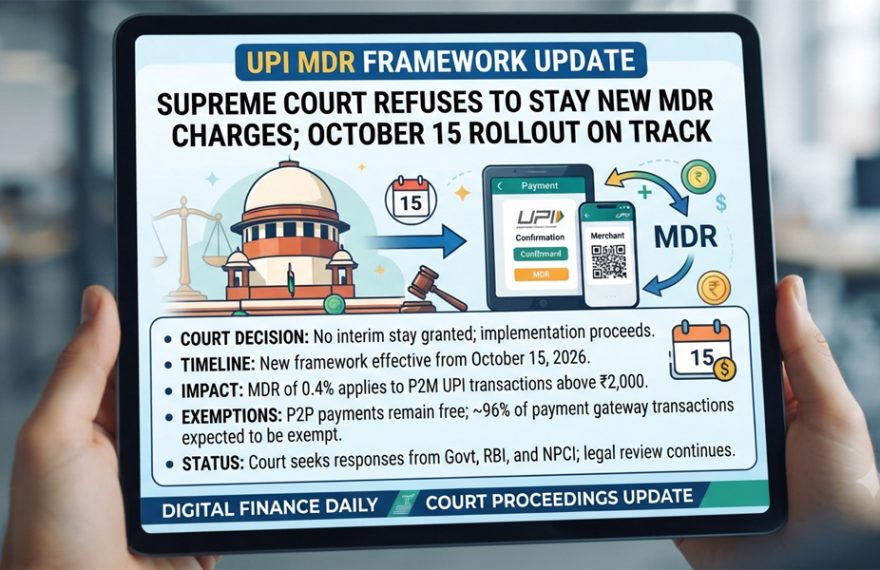
New Delhi, September 29, 2026: The Supreme Court has declined to grant an interim stay on the Centre’s decision to introduce a Merchant Discount Rate (MDR) on specified Unified Payments Interface (UPI) person-to-merchant transactions above 2,000. The decision means the proposed framework remains scheduled for implementation from October 15, 2026, unless there is a further order or policy change.

A three-judge bench headed by Chief Justice of India Surya Kant, along with Justices Joymalya Bagchi and V. Mohana, was hearing a petition challenging the government’s notifications introducing the new UPI merchant-payment framework.

Instead of stopping the proposed rollout, the court has sought responses from the Union government, Reserve Bank of India (RBI) and National Payments Corporation of India (NPCI). The respondents have been asked to submit their replies within four weeks. The court has also questioned the legal basis and nature of the proposed charge.

Under the new framework, eligible person-to-merchant UPI payments above 2,000 will generally attract an MDR of 0.4 per cent. The charge is subject to limits, including a maximum MDR of 300 for transactions of 75,000 and above. Payments between individuals will continue to remain free.

The government has maintained that MDR is not a tax or government fee. Instead, it is described as a charge within the digital payments ecosystem, with the amount distributed among participating entities involved in processing the transaction. The government has also stated that the MDR should not be separately recovered from customers.

The framework also provides exemptions and special provisions for certain categories. According to the Centre’s submissions before the Supreme Court, around 96 per cent of transactions routed through payment gateways are expected to remain exempt. Certain essential-service transactions will have a lower cap, while small merchants covered under the zero-MDR framework will continue to receive payments without the new charge.

The proposed change comes after nearly six years during which UPI merchant payments operated without a conventional MDR. The government has argued that the revised system is intended to support the long-term sustainability of the digital-payment ecosystem as transaction volumes continue to expand.

For ordinary UPI users, the immediate impact is expected to be limited because the proposed MDR is structured as a merchant-side charge rather than a direct customer transaction fee. However, the treatment of the additional cost by individual businesses could become an important issue once the framework takes effect.

  1. The Supreme Court’s latest order does not finally determine whether the MDR framework is legally valid. The court has only declined to halt its implementation at this stage while seeking responses from the concerned authorities.

The next phase of the case will therefore focus on the government’s legal and technical justification for the framework. Until the court issues another direction, the proposed October 15 implementation date remains unchanged.

Dynamic Leader News Desk

Prathiban DC


Bangalore Karnataka

Karnataka’s Drought Situation Comes Under Centre’s Lens From October 3

Bengaluru, September 28, 2026: The Centre has confirmed that three Central teams will visit Karnataka from October 3 to assess the state’s drought situation, including crop damage, water availability and conditions faced by farmers across affected regions.

The assessment comes after Karnataka declared a large number of taluks drought-affected and sought financial assistance from the Union government. The Central teams are expected to compare the state’s assessment with ground-level conditions before further decisions are taken on drought relief.

Three Teams to Cover Major Regions

The Inter-Ministerial Central Team will be led by Joint Secretary Ajeet Kumar Sahu. The teams have been assigned different parts of the state for the field assessment.

One team will cover Tumakuru, Chitradurga, Davanagere and Vijayanagara. A second team will visit Hassan, Mysuru and Chamarajanagar, with Mandya also being considered as part of the assessment, particularly in connection with water levels in the Krishna Raja Sagar reservoir.

The third team will focus on Yadgir, Raichur, Bagalkot and Koppal in North Karnataka.

The teams are scheduled to begin the assessment process from October 3, with officials expected to inspect affected areas and interact with state and district authorities.

177 Taluks Declared Drought-Affected

Karnataka has so far declared 177 of its 240 taluks as drought-affected. Ground-level verification is also continuing in another 50 taluks, meaning the number of affected areas could change as assessments progress.

The drought situation has raised concerns over crop production, drinking water availability, livestock and rural livelihoods. The Central assessment is expected to provide an independent field-level picture of the situation.

Karnataka Seeks Central Financial Assistance

The Karnataka government has sought approximately ₹3,705.30 crore in assistance under its drought memorandum for the 2026 Kharif season.

Chief Minister D.K. Shivakumar has also requested the Centre to release 50 per cent of the requested assistance as interim support, along with an advance release of the Central share of disaster-response funds. The state has said immediate assistance is required for measures including crop-loss support, drinking water arrangements and protection of livestock.

The Karnataka government has also announced a 1,250-crore one-time relief package for around 50 lakh farmers, according to reports on the state’s drought response.

Focus Turns to Rabi Season

The drought assessment comes at a crucial time as preparations begin for the Rabi agricultural season.

Union Agriculture Minister Shivraj Singh Chouhan has asked drought-affected states to consider available water and soil moisture while deciding their Rabi cropping plans. Areas with limited water availability may need to consider crops requiring comparatively less irrigation.

The Centre has indicated that the field assessments in Karnataka will help determine the extent of the drought and the assistance required by the state.

For farmers and rural communities across Karnataka, the October assessment is expected to be closely watched as the state awaits further decisions on drought relief and financial assistance.

Dynamic Leader News Desk

Prathiban DC 

Employment Karnataka

Nandini Milk Price Hike Debate Intensifies in Karnataka as Government Reviews Proposal

Bengaluru, September 28, 2026: The debate over a possible increase in Nandini milk prices has intensified in Karnataka, with cooperative milk unions seeking higher prices while the state government examines the impact on both dairy farmers and consumers.

Representatives of  Karnataka’s milk unions have been pressing for an increase in the price of  Nandini milk, citing rising expenses related to cattle feed, fodder, veterinary care, transportation, electricity and milk processing. The issue has gained renewed attention following meetings between milk union representatives and Chief Minister D.K. Shivakumar.

The demand has varied during recent discussions, with milk unions seeking increases ranging from 8 to 12 per litre. In the latest discussions, the unions have sought a 12-per-litre increase, with a portion proposed for milk producer societies. The final amount, however, has not been approved by the state government.

Government Seeks More Data

Chief Minister D.K. Shivakumar has indicated that a final decision will be taken after examining relevant financial and market data. The government is also comparing milk prices and procurement rates in neighbouring states, including Tamil Nadu, Andhra Pradesh and Telangana.

The government has also sought information on production costs, milk procurement, processing expenses and the financial position of the milk unions before taking a decision.

Milk Unions Cite Rising Costs

Milk producers and cooperative unions have argued that the cost of maintaining cattle has increased considerably. Higher prices for feed, fodder, medicines and other inputs have put additional pressure on dairy farmers.

According to recent reports, Karnataka’s 16 milk unions together procure approximately 1.04 crore litres of milk every day and sell around 62.48 lakh litres of milk and curd. More than 25 lakh milk producers are associated with the cooperative network through over 15,000 producer societies.

The drought situation in parts of Karnataka has also affected fodder availability, adding to the concerns of dairy farmers and milk unions.

Financial Performance Varies Among Milk Unions

The financial position of individual milk unions is another factor in the ongoing discussion.

Data reported for April to July 2026 showed that 11 of Karnataka’s 16 milk unions recorded profits, with a combined profit of about 39.95 crore. Five unions reported losses during the same period, with Chikkaballapur recording the highest reported loss of approximately 11.88 crore. Bengaluru’s BAMUL reported a profit of about 15.73 crore during the period.

The figures indicate that the financial situation is not uniform across all milk unions.

Consumers Await Final Decision

Any increase in Nandini milk prices could directly affect household budgets, hotels, restaurants, tea shops and other businesses that use milk regularly.

The government therefore faces the task of considering the demands of milk producers and cooperative unions while also assessing the effect of a price revision on consumers.

For now, no final statewide retail price increase has been announced. The proposal is expected to be considered after the government completes its review and discussions at the Cabinet level.

The final decision will determine whether Nandini milk prices change, the size of any increase and how the additional revenue is distributed between milk producers, cooperative societies and milk unions.

Dynamic Leader News Desk

Prathiban DC 

Karnataka

Karnataka Makes Voting Process Easier for Senior Citizens and PwDs

Bengaluru: Karnataka Chief Minister D.K.Shivakumar had written to the Chief Election Commissioner, requesting that an adult family member be allowed to appear before the Electoral Registration Officer (ERO/AERO) on behalf of senior citizens, persons with disabilities (PwDs), sick persons and overseas voters.

Responding to this request, the Office of the Chief Electoral Officer, Karnataka, has issued directions to make the process easier.

The move will help voters who may find it difficult to appear in person to submit the required documents and information.

The aim is to ensure that every eligible voter in Karnataka can participate in the electoral process without facing unnecessary difficulties.

Karnataka

Prajwal Revanna’s ‘Mobile’ Use in Jail: Case Takes Another Explosive Turn

Bengaluru: Former MP Prajwal Revanna, who is currently in jail in connection with a rape case, is facing fresh questions following the investigation into the alleged use of a mobile phone inside the prison. The latest findings from the Forensic Science Laboratory (FSL) examination of the mobile phone and pen drive are said to have provided new clues to the police investigation.

According to the FSL report obtained by the police, several important digital details have been recovered. During the investigation, a pen drive seized by the authorities was examined and 173 video files were reportedly found. Among them, three videos are allegedly of Prajwal Revanna.

More than 100 pornographic videos were also reportedly found. Police are investigating the source of these videos, how they were used and when they were accessed. Digital evidence suggesting video calls with some women has also reportedly emerged during the investigation.

How Did the Mobile Phone Reach the Jail?
The alleged delivery of a mobile phone to Prajwal Revanna inside Parappana Agrahara Central Prison has also come under investigation. According to police sources, the role of a jail warder is being examined.

There are also allegations that money was paid to arrange the mobile phone. Police are investigating these claims along with the details of the SIM card and phone calls.

It is also alleged that Prajwal Revanna used the mobile phone to make calls to several young women. The police are examining the call records and other digital evidence.

Search for Digital Evidence Continues
Earlier, during a CCB raid, a mobile phone and a pen drive were reportedly recovered. The devices were sent for forensic examination, following which some videos were successfully retrieved. Efforts are continuing to recover additional data.

Based on the videos, call records and other digital evidence, police may question Prajwal Revanna again. Women who were allegedly in contact with him through video calls may also be issued notices and questioned as part of the investigation.

Jail Staff Under Investigation
The role of the concerned jail staff is also being investigated in connection with the alleged supply of the mobile phone. If the allegations are proved, legal action could be taken against those found responsible.

The latest digital evidence recovered from the mobile phone and pen drive is expected to give a new direction to the investigation into the Prajwal Revanna case. The investigation could expand further once the complete FSL findings are available.

Bangalore Education Karnataka

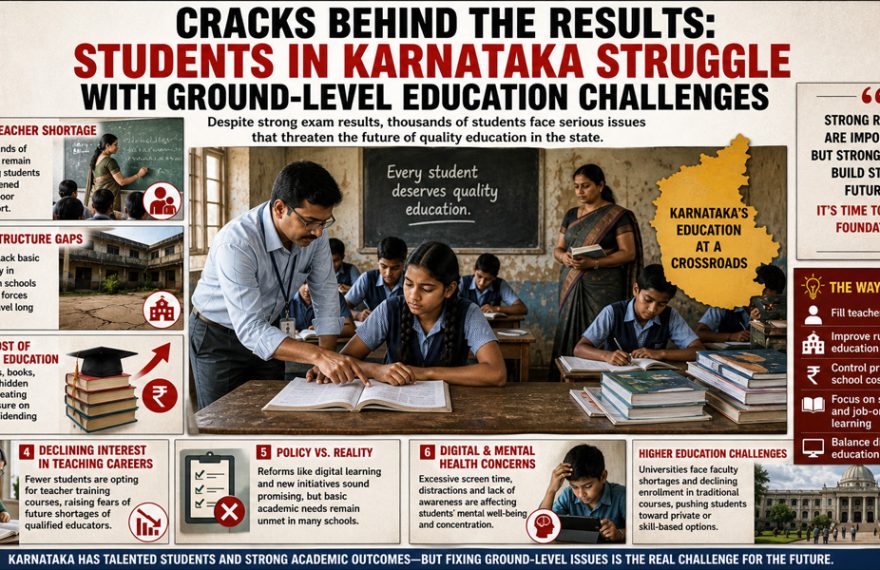
Cracks Behind the Results: Students in Karnataka Struggle with Ground-Level Education Challenges

Prathiban DC

Bengaluru: While Karnataka continues to be recognized as one of India’s leading education hubs, a closer look reveals that thousands of students across the state are facing serious challenges that often go unnoticed behind impressive academic results.

One of the most pressing issues is the shortage of teachers in government schools. With tens of thousands of vacancies still unfilled, many schools, especially in rural areas operate with minimal staff. In some cases, a single teacher is responsible for handling multiple classes and subjects. This not only affects the quality of teaching but also places immense pressure on existing educators, ultimately impacting student learning outcomes.

Infrastructure gaps remain another major concern. While urban schools benefit from better facilities, many rural institutions still lack basic amenities such as adequate classrooms, laboratories, and libraries. The delay in upgrading high schools to pre-university colleges in several regions has forced students to travel long distances for higher education. For many, particularly girls, this becomes a barrier, leading to increased dropout rates.

The rising cost of private education is also adding to the burden on families. Parents across the state have raised concerns over high fees, expensive textbooks, uniforms, and other hidden charges. This growing financial strain has widened the gap between students who can afford quality education and those who rely on under-resourced government schools.

Another worrying trend is the declining interest in the teaching profession. Fewer students are opting for teacher training courses, leading to concerns about future shortages of qualified educators. Experts warn that this could further weaken the education system if not addressed through better incentives and policy support.

Policy implementation remains inconsistent on the ground. While the government has introduced modern reforms such as digital learning and skill-based education, many schools are still struggling to meet basic academic needs. Critics argue that focusing on advanced initiatives without strengthening foundational infrastructure may widen existing gaps rather than bridge them.

In addition to academic challenges, students are also facing digital and mental health concerns. Increased exposure to smartphones and online platforms has led to issues such as distraction, reduced concentration, and screen addiction. Educators and parents have expressed the need for balanced digital usage and better awareness about mental well-being among students.

Higher education institutions are not immune to these problems. Several universities are grappling with faculty shortages and declining enrollment in traditional courses. This has led many students to shift toward private institutions or skill-based programs, raising questions about the long-term sustainability of public higher education.

Despite these challenges, students across Karnataka continue to show resilience and determination. However, education experts emphasize that strong exam results alone do not reflect the true health of the system. Addressing these ground-level issues is essential to ensure that every student, regardless of background, has access to quality education.

Conclusion:
Karnataka’s education system stands at a crossroads. While it boasts talented students and strong academic outcomes, the underlying challenges of teacher shortages, infrastructure gaps, rising costs, and policy implementation must be urgently addressed to secure a better future for the next generation.

Karnataka

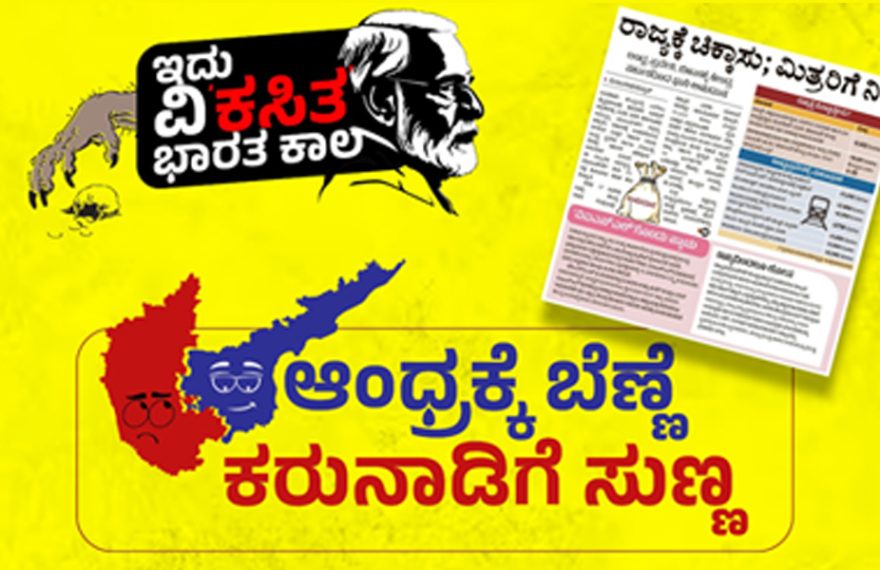
Discriminatory Attitude of the Centre Towards a Non-BJP Government: Modi Government’s Betrayal of Karnataka!

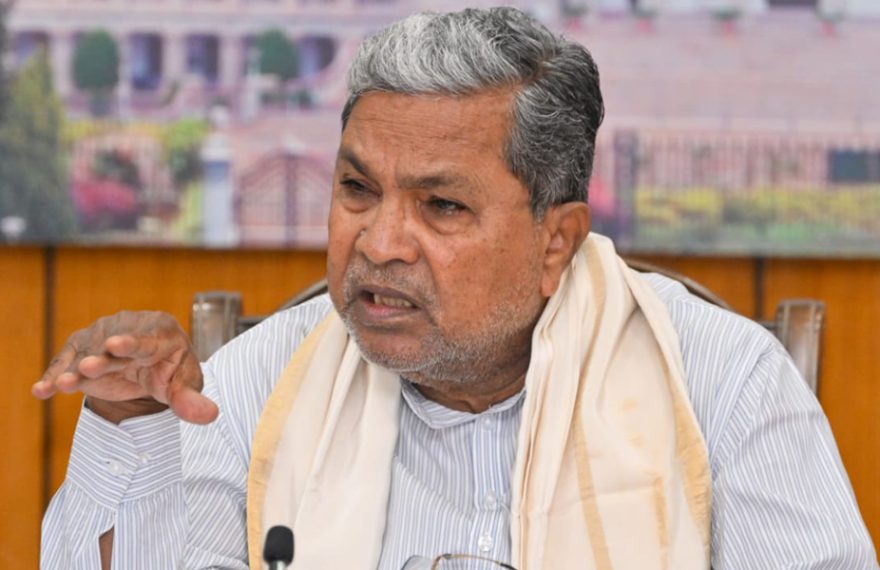
Bengaluru: “The sole reason the central government led by Narendra Modi is pursuing a policy of betrayal against Karnataka is that a non-BJP government is in power in the state,” Chief Minister Siddaramaiah has strongly alleged.

“In the last two and a half years, the central government has not only cheated Karnataka by denying its rightful share of taxes, but has also neglected Kannadigas by refusing funds and approvals for all kinds of development projects, including irrigation, railways, and highways,” he said.

“Siddaramaiah criticised that the threat issued by BJP national president J.P.Nadda during the Assembly elections – that those who do not vote for the BJP will be denied Prime Minister Modi’s blessings – appears to have now been put into practice by the central government.”

“Leaders from Karnataka who won as BJP MPs and became ministers at the Centre have neither the courage to speak against this discriminatory attitude in front of the Prime Minister nor any concern for the people who voted for them. While they spread hate in a loud voice on public platforms, their hands and legs tremble the moment they face Modi,” he remarked sarcastically.

“Even as injustice is being meted out to Kannadigas, the conduct of the JD(S) and its leader H.D.Kumaraswamy – who are behaving like subordinates of the central government purely for self-interest instead of raising their voice against it – is disgusting. Must one bow down so much just for a ministerial post? This is not my question alone; it is the question of every aggrieved Kannadiga,” Chief Minister Siddaramaiah clarified.

Karnataka

No One Is Above the Law: DGP Probe, Border Dispute & Opposition Politics – CM Siddaramaiah

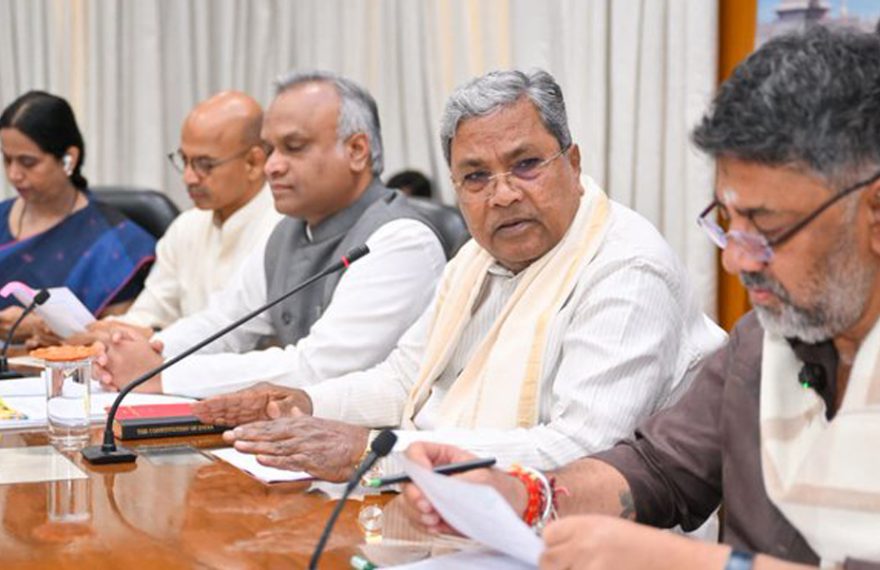
Belagavi: Chief Minister Siddaramaiah on Sunday made it clear that disciplinary action will be taken against DGP Ramachandra Rao following allegations of inappropriate behavior with women, stating that no one is above the law, irrespective of their position.

Speaking to the media in Belagavi, the Chief Minister said an investigation will be conducted into the matter and appropriate action will follow based on the findings. “Just because someone is a high-ranking officer does not place them beyond the purview of the law,” he asserted.

Responding to accusations from the opposition, Siddaramaiah targeted Janardhana Reddy, saying he was responsible for looting the state’s wealth and had gone to jail. “His case is still pending before the Supreme Court. He has no moral authority to make allegations,” the Chief Minister said.

He accused opposition parties of indulging in false propaganda and misleading the public. With the legislative assembly session set to begin on January 22, Siddaramaiah urged the opposition to raise their concerns on the floor of the House instead of making baseless allegations outside. “If they have issues, they should debate them directly during the session,” he said.

On the Karnataka–Maharashtra border dispute, the Chief Minister said the state’s legal team is fully prepared to contest the petition filed by the Maharashtra government. He questioned whether Maharashtra has the jurisdiction to approach the court on the issue and said this fundamental question must be resolved first.

Siddaramaiah reiterated the state government’s commitment to protecting Karnataka’s interests through legal and constitutional means.

Karnataka

Repeal of MGNREGA an Assault on Workers’ Rights and Federalism: CM Siddaramaiah

Bengaluru: Chief Minister Siddaramaiah strongly criticised the BJP-led Union Government for repealing the Mahatma Gandhi National Rural Employment Guarantee Act (MGNREGA), calling it a direct attack on workers’ rights and a grave insult to India’s federal structure.

“If Mahatma Gandhi was assassinated once by Godse, today the BJP is repeatedly erasing him by removing his name altogether. The BJP government functions under the ideological guidance of the RSS, which draws inspiration from the Manusmriti,” Siddaramaiah said.

He alleged that the Union Government under Prime Minister Narendra Modi repealed MGNREGA and introduced the VB-G RAM G Act unilaterally, without consulting state governments or seeking the opinion of the people. “This decision reflects an authoritarian mindset and a complete disregard for democratic and federal principles,” he said.

Recalling the UPA era under Dr Manmohan Singh, the Chief Minister said rights-based legislations such as the Right to Work, Right to Information and Right to Education empowered citizens across the country. “MGNREGA was a landmark law that ensured dignity and livelihood security for rural India,” he noted.

Siddaramaiah expressed serious concern over the hurried passage of the new law. “The Bill was introduced in Parliament on December 17 and pushed through the very next day. Today, India has 12.16 crore MGNREGA workers, including 6.21 crore women. About 17% belong to Scheduled Castes and 11% to Scheduled Tribes. In Karnataka alone, there are 71.18 lakh workers, of whom 36.75 lakh (51.6%) are women. The livelihoods of all these workers are now under threat,” he Expressed concern.

Accusing the Modi Government of prioritising corporate interests over workers and farmers, Siddaramaiah said that MGNREGA had allowed rural families to work in their own villages alongside agricultural activities, create durable community assets and strengthen village economies. “Most importantly, people had a legal right to demand work. That right has now been taken away,” he said.

He further alleged that over the past 11 years, the Union Government’s primary achievement has been renaming, diluting or dismantling people-centric welfare schemes. “Nearly 30 welfare programmes have been altered or withdrawn, hollowing out their original intent,” he said.

Under MGNREGA, a minimum of 100 days of work per year was guaranteed, with employment provided locally. “Under the new law, as per Section 5(1), work will be available only in areas notified by the Union Government. There is no assurance to Gram Panchayats or workers. Employment will be denied for 60 days during peak agricultural seasons, and wage indexation to inflation has been removed,” he pointed out.

The Chief Minister also criticised the shift in financial responsibility. “Earlier, the Union Government bore the entire wage cost. The new law pushes 40% of the financial burden onto states, violating Articles 258 and 280 of the Constitution. Powers granted to Gram Panchayats under the 73rd Constitutional Amendment have also been taken away, severely undermining federalism and local self-governance,” he said.

Siddaramaiah said he had written to the Prime Minister on December 30, urging that the unconstitutional law should not be implemented. “We demand the complete repeal of the VB-G RAM G Act, restoration of MGNREGA, reinstatement of employment rights for women, Dalits and Adivasis, and the return of powers to Panchayats,” he said.

Warning of serious social consequences, he said the new law would increase unemployment, reduce women’s participation in the workforce, intensify distress among Dalit and Adivasi families, and weaken rural livelihoods. “Panchayats will be reduced to mere implementing agencies, while contractors and corporate interests will gain strength,” he added.

The Chief Minister recalled that the BJP had opposed MGNREGA from the outset and had mocked people-centric legislations such as the Food Security Act. “Weakening welfare laws that empower the poor has always been part of the BJP’s long-term agenda,” he said.