#1 Daily News Updates, Politics, Crime, movie reviews, Latest News - dynamicleader.in
India Archives » Dynamic Leader English - Daily News Updates
Home Posts tagged India
National

Power, Mandate, and Dignity: The Political Storm Around Mamata Banerjee’s Remark

Prathiban DC

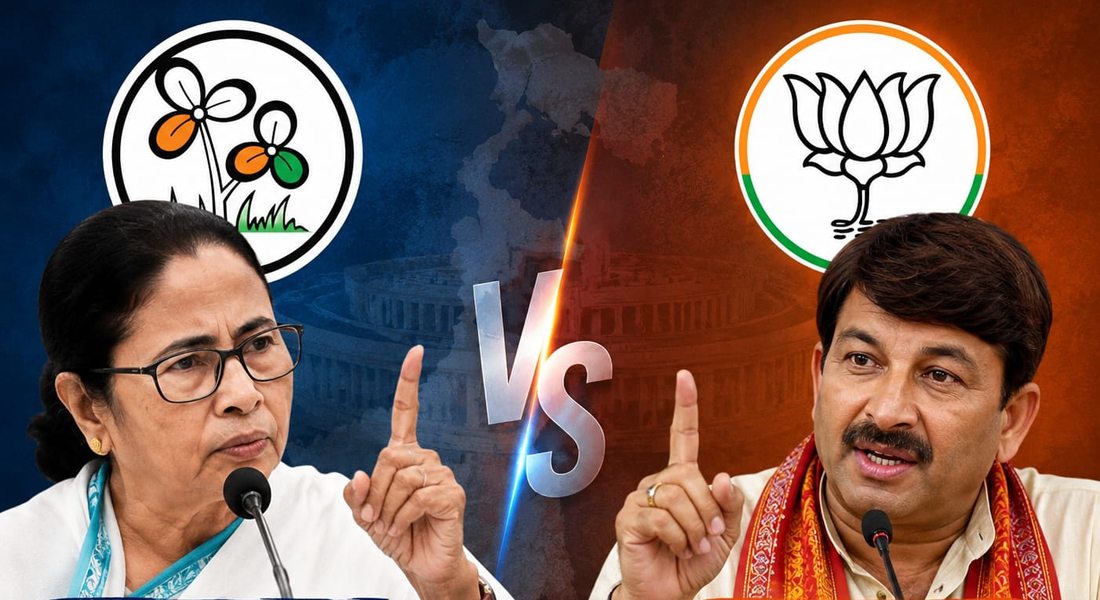
A recent political exchange has sparked debate across India after Mamata Banerjee reportedly asserted that she would not resign from her position as Chief Minister. Responding to this, Manoj Tiwari criticized her stance, suggesting that such a position appears to challenge the spirit of democratic governance.

At the heart of this issue lies a fundamental principle of democracy: power is granted by the people and can just as easily be taken away by them. In a democratic system like India’s, elected leaders hold office only as long as they enjoy the confidence of the public or maintain a majority in the legislative assembly. When that support fades, stepping down is not just a legal formality it is seen as a moral responsibility.

Manoj Tiwari’s remarks reflect this viewpoint. He argued that refusing to resign, especially in a situation where leadership is being questioned, could be interpreted as placing personal authority above constitutional norms. According to him, the act of formally resigning is more than just a signature on paper it symbolizes respect for democratic processes and institutions. It allows leaders to exit their roles with grace and dignity, maintaining the integrity of the system.

On the other side, Mamata Banerjee’s statement can be viewed through a political lens. Leaders often make such declarations to signal confidence, assert control, or rally support among their followers. In high-stakes political environments, such remarks are sometimes aimed at strengthening public perception of stability and resilience, rather than indicating a literal refusal to follow constitutional procedures.

This situation also highlights the ongoing rivalry between political parties, particularly between the ruling party in West Bengal and the Bharatiya Janata Party (BJP). Statements like these are not made in isolation they are part of a broader narrative where both sides attempt to shape public opinion and position themselves as defenders of democratic values.

It is important to note that the Constitution of India provides clear mechanisms for leadership changes. A Chief Minister cannot continue in office without majority support in the state assembly. If such support is lost, resignation or removal becomes inevitable, regardless of personal declarations. Therefore, the debate is less about whether a leader can refuse to resign and more about how they choose to respond to political challenges.

Ultimately, this controversy is a reminder of the delicate balance between political power and democratic accountability. While strong leadership often involves confidence and determination, it must also align with constitutional principles and public mandate. The way leaders handle such moments not only affects their personal legacy but also influences public trust in democratic institutions.

As the situation unfolds, it will continue to draw attention from political observers and citizens alike, raising broader questions about leadership, responsibility, and respect for the democratic process in India.

Bangalore Education Karnataka

Cracks Behind the Results: Students in Karnataka Struggle with Ground-Level Education Challenges

Prathiban DC

Bengaluru: While Karnataka continues to be recognized as one of India’s leading education hubs, a closer look reveals that thousands of students across the state are facing serious challenges that often go unnoticed behind impressive academic results.

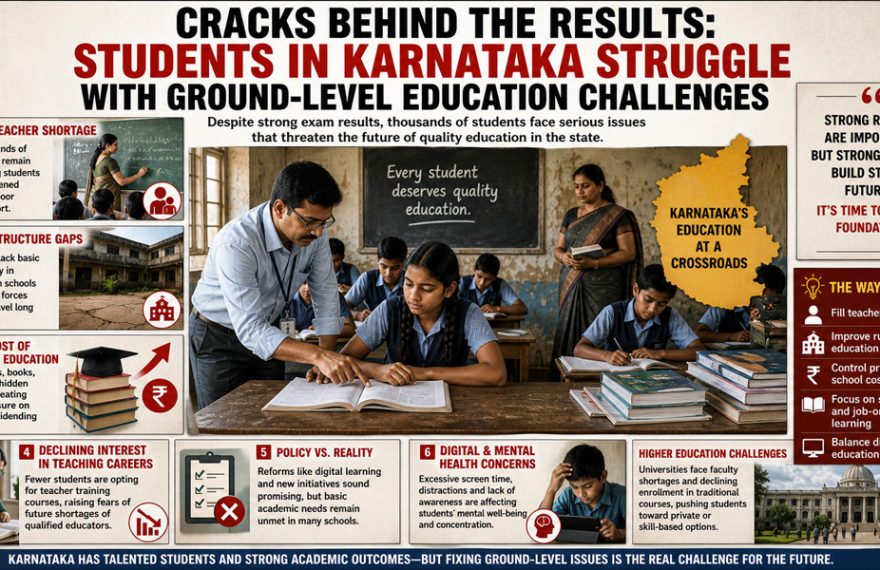
One of the most pressing issues is the shortage of teachers in government schools. With tens of thousands of vacancies still unfilled, many schools, especially in rural areas operate with minimal staff. In some cases, a single teacher is responsible for handling multiple classes and subjects. This not only affects the quality of teaching but also places immense pressure on existing educators, ultimately impacting student learning outcomes.

Infrastructure gaps remain another major concern. While urban schools benefit from better facilities, many rural institutions still lack basic amenities such as adequate classrooms, laboratories, and libraries. The delay in upgrading high schools to pre-university colleges in several regions has forced students to travel long distances for higher education. For many, particularly girls, this becomes a barrier, leading to increased dropout rates.

The rising cost of private education is also adding to the burden on families. Parents across the state have raised concerns over high fees, expensive textbooks, uniforms, and other hidden charges. This growing financial strain has widened the gap between students who can afford quality education and those who rely on under-resourced government schools.

Another worrying trend is the declining interest in the teaching profession. Fewer students are opting for teacher training courses, leading to concerns about future shortages of qualified educators. Experts warn that this could further weaken the education system if not addressed through better incentives and policy support.

Policy implementation remains inconsistent on the ground. While the government has introduced modern reforms such as digital learning and skill-based education, many schools are still struggling to meet basic academic needs. Critics argue that focusing on advanced initiatives without strengthening foundational infrastructure may widen existing gaps rather than bridge them.

In addition to academic challenges, students are also facing digital and mental health concerns. Increased exposure to smartphones and online platforms has led to issues such as distraction, reduced concentration, and screen addiction. Educators and parents have expressed the need for balanced digital usage and better awareness about mental well-being among students.

Higher education institutions are not immune to these problems. Several universities are grappling with faculty shortages and declining enrollment in traditional courses. This has led many students to shift toward private institutions or skill-based programs, raising questions about the long-term sustainability of public higher education.

Despite these challenges, students across Karnataka continue to show resilience and determination. However, education experts emphasize that strong exam results alone do not reflect the true health of the system. Addressing these ground-level issues is essential to ensure that every student, regardless of background, has access to quality education.

Conclusion:
Karnataka’s education system stands at a crossroads. While it boasts talented students and strong academic outcomes, the underlying challenges of teacher shortages, infrastructure gaps, rising costs, and policy implementation must be urgently addressed to secure a better future for the next generation.