#1 Daily News Updates, Politics, Crime, movie reviews, Latest News - dynamicleader.in
Editor: Parthiban D C, Author at Dynamic Leader English - Daily News Updates » Page 3 of 3
Home Articles posted by Editor: Parthiban D C (Page 3)
International

Bangladesh’s Next Prime Minister? Tarique Rahman’s Return Set to Redefine the Nation’s Politics

Prathiban DC
Editor 

Bangladesh is preparing for the return of Bangladesh Nationalist Party (BNP) leader Tarique Rahman, who is set to come home after 17 years in exile. His arrival marks a critical moment for the election-bound nation, as the comeback of the BNP’s acting chairman is expected to significantly reshape the country’s political landscape.

Tarique Rahman is the son of former President Ziaur Rahman and former Prime Minister Khaleda Zia. His return comes at a time when Khaleda Zia, the BNP chairperson, has largely withdrawn from active politics due to declining health. In her absence, Tarique has led the party from abroad while facing a series of legal challenges.

During the tenure of former Prime Minister Sheikh Hasina, courts convicted Rahman in multiple cases, including corruption, bribery, money laundering, illegal accumulation of wealth, and involvement in grenade attacks. However, following the collapse of the Hasina government, these legal barriers have been removed, clearing the path for his political comeback.

Although Rahman was expected to return to Bangladesh in November, reports suggest his arrival was delayed by more than a month due to prevailing security concerns in the country.

Firm Foreign Policy Stance
Tarique Rahman is widely regarded as holding a strong anti-India position and has openly expressed his views on foreign policy matters, including the long-pending Teesta water-sharing dispute. At the same time, he has distanced himself from pursuing close ties with Pakistan. “Not Delhi, not Pindi, nor any other country. Bangladesh first,” Rahman stated in May, months after the fall of the Hasina government.

His return coincides with a sensitive period, as radical Islamic groups have been accused of fueling unrest and instability across the country.

Political Realignment Ahead of Elections
For decades, Bangladesh’s politics has largely been dominated by two major parties—the Awami League led by Sheikh Hasina and the BNP founded by Khaleda Zia. With the Awami League now barred from participating in elections, the political space has opened up for the BNP’s resurgence.

However, radical political groups are reportedly attempting to delay the electoral process in a bid to weaken the BNP’s support base and expand their own influence.

If the BNP secures victory in the upcoming elections, Tarique Rahman could emerge as the next Prime Minister. Positioning himself as a champion of democratic restoration, Rahman has already unveiled his campaign roadmap and policy agenda. Addressing party workers at a recent event, he asserted that “only democracy can pull the country out of this crisis,” urging BNP members to strengthen democratic institutions.

As Bangladesh stands at a political crossroads, Tarique Rahman’s return is widely seen as a development that could redefine the country’s future trajectory.

Karnataka

Karnataka Hate Speech and Hate Crimes Prevention Bill Welcomed, but Concerns Remain: Khasim Saab

The proposed Karnataka Hate Speech and Hate Crimes (Prevention) Bill, which classifies hate speech as a punishable offence, marks a historic step towards social justice, said Khasim Saab, while underlining both its significance and the concerns surrounding its implementation.

India is a nation guided by one of the world’s strongest parliamentary democratic Constitutions. The vision of an egalitarian society is deeply embedded in its Preamble and Directive Principles, which find real meaning only when governments translate them into effective laws and policies.

Religious minorities in India-particularly Muslim communities-have, over the years, been subjected to social discrimination, exclusion, violence, deaths, atrocities, marginalisation, and denial of rights and opportunities across the country, especially in Karnataka. The politics of hate speech has further deprived them of their civil rights.

Hate speeches rooted in religion have continuously fuelled violence and discrimination, exploiting differences related to faith, language, region, marriage, food habits, prayer practices, culture, religious customs, attire, and political dissent. These divisive narratives have been actively nurtured, yielding damaging consequences for social harmony.

At a time when religious hatred is increasingly being converted into a vote bank and mono-religious cultural politics occupies the seat of power, the Congress government’s move to introduce the Karnataka Hate Speech and Hate Crimes (Prevention) Bill-2025 is both significant and commendable. By recognising hate speech as a criminal offence, the Bill takes a landmark step towards social justice and sets an example for the rest of the country. Its approval by the Cabinet on December 4 and subsequent introduction in the Belagavi session of the Legislature reflects the government’s intent. However, whether its true spirit will be realised by overcoming implementation hurdles remains to be seen.

A key question, Khasim Saab noted, is whether the government and concerned departments possess the commitment and courage to enforce this law fearlessly-irrespective of religion, community, party, or group-against anyone indulging in hate speech or provocative statements. Particularly, the government must demonstrate resolve by taking strict action under the new law against individuals already facing multiple hate speech cases. Only then can the Bill’s genuine public interest be established.

The law must not be applied selectively against the weak while allowing powerful individuals to escape accountability. For the legislation to be truly effective, strict action must be taken regardless of political position. There is also a need for a clear framework for victim rehabilitation and compensation.

At the same time, some provisions of the Bill may carry the risk of unconstitutional misuse. The inability to clearly distinguish between legitimate criticism of religion or communities and outright hate speech could open the door to misuse by vested interests.

The Bill has been opposed by the BJP, Hindutva groups, and even the JD(S). Notably, Karave leader Narayan Gowda has also taken a stand against it. The government must address their stated concerns. Resistance from Sangh Parivar-affiliated groups is unsurprising, as hate speech has long been central to the BJP’s politics of power, often fuelling communal tensions to gain political advantage. Legally curbing this would effectively strike at the roots of divisive politics.

Despite several cases already registered against habitual hate speech offenders in the state, these socially destructive elements have often received protection and patronage under the guise of Hindutva (not Hinduism) from those in power, cutting across party lines. The weak enforcement of existing laws has enabled this trend, making the introduction of a dedicated law both necessary and justified.

The new Bill seeks to address loopholes in existing laws and strengthen provisions against hate speech or incitement to hate crimes based on religion, community, language, place of birth, caste, gender, or residence-covering all communities in Karnataka, not just Muslims. First-time offenders face imprisonment ranging from one to seven years along with a fine of ₹50,000, while repeat offences can attract up to ten years in prison. The law applies uniformly to all—Hindus, Muslims, Christians, Jains, Buddhists, Parsis, Lingayats, and others.

Under the proposed legislation, hate speech cases will be tried in JMFC courts, with investigations led by the Superintendent of Police. The law covers hate speech disseminated through public statements, writings, audio-visual content, and electronic media that incite hostility, violence, or discord between individuals or groups based on religion, caste, race, language, gender, birthplace, or place of residence.

Those seeking to divide society in the name of religion and fracture Karnataka’s pluralistic harmony find this law difficult to accept. If such resistance is evident even in Karnataka, one can only imagine the reaction if similar laws were introduced in states like Gujarat, Uttar Pradesh, Delhi, or Bihar.

By removing the inadequacies of earlier IPC provisions and imposing stringent penalties for hate speech and incitement, this law has the potential to curb political projects that thrive on creating divisions between communities, castes, classes, professions, and languages.

May secularism, social welfare, and communal harmony take deep root in this land. Khasim Saab expressed hope that the Congress party and the state government will demonstrate greater maturity and resolve in ensuring the comprehensive and fair implementation of this law.

International

Manufacturing Is Declining in India: Rahul Gandhi from Germany

Berlin: Manufacturing is the backbone of strong economies, but unfortunately, manufacturing in India is on the decline, Congress MP and Leader of the Opposition in the Lok Sabha Rahul Gandhi has said.

Rahul Gandhi, who is currently on a visit to Germany, has drawn criticism as his overseas trip comes ahead of the conclusion of the Parliament session. Amid this backdrop, he visited the BMW manufacturing facility, where he closely examined the BMW G 450 GS motorcycle. The model has been jointly developed by BMW and TVS Motor Company, which operates its manufacturing unit in Hosur, Tamil Nadu. The motorcycle is yet to be launched in India.

Rahul Gandhi shared a video of his visit on social media and issued a statement highlighting his experience. He said he visited the BMW plant in Munich, which offered him an opportunity to understand the global standards and vision of BMW. Witnessing world-class manufacturing at close quarters, he noted, was a remarkable experience.

Calling it a proud moment, Rahul Gandhi said seeing the 450cc motorcycle developed in collaboration with TVS showcased the strength and capability of Indian engineering on a global platform.

Emphasising the importance of manufacturing, he said it forms the backbone of resilient economies. However, manufacturing in India is unfortunately weakening. To accelerate growth, the country must significantly expand its manufacturing base, build meaningful and robust production ecosystems, and create a large number of high-quality jobs, he added.

National

National Herald Case: Court Rejects ED Complaint, Gandhis Get Major Relief

In a major development in the National Herald case, a Delhi court on Tuesday threw out the Enforcement Directorate’s prosecution complaint, offering significant relief to senior Congress leaders Sonia Gandhi and Rahul Gandhi. The ruling has, for the time being, stalled the ED’s move to pursue money-laundering charges linked to the control of Associated Journals Limited (AJL).

Special Judge Vishal Gogne of the Rouse Avenue Courts held that the complaint filed under the Prevention of Money Laundering Act (PMLA) could not be sustained in law. The court noted that the ED’s case was founded on a private complaint and subsequent summons, rather than on a registered First Information Report (FIR), which is essential to trigger proceedings under the PMLA.

Though the court stopped short of giving a clean chit, the decision substantially undercuts the agency’s case in what has been one of its most high-profile and politically sensitive investigations.

The ED had recently submitted a fresh complaint accusing Sonia Gandhi and Rahul Gandhi of committing the offence of money laundering under Section 3 of the PMLA, read with Sections 44 and 70, and punishable under Section 4 of the Act.

Separately, the court ruled that the Gandhis and other accused persons are not entitled to receive copies of the FIR in proceedings arising from a newly registered case by the Economic Offences Wing (EOW) of the Delhi Police.

Court’s Observations
The court emphasised that the ED failed to demonstrate the existence of “proceeds of crime,” a foundational requirement for invoking the PMLA. Without clear evidence of illegal gains, the judge said, the offence of money laundering cannot be presumed.

According to the ED, Young Indian Private Limited—where Sonia and Rahul Gandhi hold majority stakes—had allegedly taken control of AJL and its properties, valued at several thousand crore rupees, through a sham arrangement. However, the court found that such allegations, without concrete proof of criminal proceeds, were insufficient to sustain prosecution.

Legal observers point out that recent judicial trends, reinforced by Supreme Court rulings, demand strict compliance with PMLA provisions and reject speculative or assumption-based prosecutions.

Setback for the ED
The dismissal marks a significant blow to the ED’s narrative and highlights judicial insistence that investigative agencies must establish clear legal foundations before pursuing economic offence cases.

While the ED retains the option to challenge the order before a higher court, the trial court’s findings underscore the hurdles the agency must overcome to revive its case.

Broader Impact
Beyond providing immediate relief to Sonia Gandhi and Rahul Gandhi, the ruling sends a wider message on the limits of money-laundering prosecutions. Courts, it reiterates, will not allow cases to proceed on political suspicion or perception alone, but only on demonstrable evidence of crime and illicit financial activity.

As proceedings continue, the National Herald case remains a focal point where law, politics, and institutional authority intersect—making every judicial development closely watched.

International

16 Killed in Bondi Beach Shooting; Australia Pushes for Tougher Gun Laws

Sydney: Australia has been left shocked after a horrific shooting at the popular Bondi Beach area claimed the lives of 16 people. The incident has triggered renewed nationwide demands for stricter gun control laws, sparking intense debate on public safety, firearm accessibility, and the effectiveness of existing regulations.

According to eyewitness accounts, the attack occurred during a time of heavy public presence. Sudden gunfire caused widespread panic and chaos as people fled the area seeking safety. Emergency services rushed to the scene and shifted the injured to nearby hospitals. Authorities said several victims remain in critical condition, raising concerns that the death toll could increase.

Government Response
Australian Prime Minister expressed deep sorrow over the tragedy, stating that “there is no place for such violence in our society.” He emphasized that ensuring public safety remains the government’s top priority and stressed the need to review existing laws governing the use, purchase, and storage of firearms.

Both federal and state governments are holding consultations to strengthen gun licensing procedures, background checks, surveillance on illegal firearms, and mental health screening mechanisms.

Opposition and Public Reaction
Opposition parties have also backed calls for tougher gun laws, stating that action should not be limited to post-incident responses and that preventive measures are essential to save lives. Civil society groups, student organisations, and human rights activists have staged peaceful protests demanding stricter regulation of weapons.

Australia’s Gun Control Background
Australia introduced stringent gun control laws following the 1996 Port Arthur mass shooting, which led to a significant decline in gun-related violence, according to experts. However, recent incidents have once again highlighted challenges related to illegal firearms and enforcement gaps.

Next Steps
In the wake of the Bondi Beach shooting, the government is expected to form an expert committee to assess the effectiveness of current gun laws. Authorities have also announced plans to enhance security at public places, increase police patrols, and further strengthen emergency response systems.

The Bondi Beach attack has given new momentum to Australia’s debate on gun violence and is widely seen as a potential turning point that could lead to significant changes in the country’s firearm policies.

Meanwhile, several world leaders, including Indian Prime Minister Narendra Modi, have expressed deep condolences and strongly condemned the terrorist attack, reaffirming the need for global unity against violence and extremism.

Karnataka

End of the Shamanur Era; Eshwar Khandre Takes Charge as National President of Veerashaiva Lingayat Mahasabha

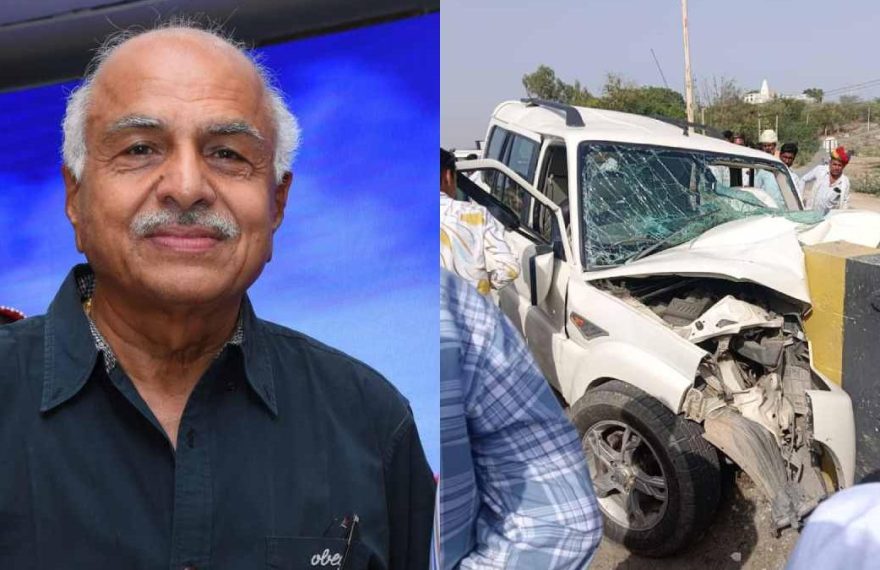
Bengaluru: Veteran legislator and long-serving President of the All India Veerashaiva Lingayat Mahasabha, Shamanur Shivashankarappa, passed away on Sunday due to age-related illness. He was 95. His demise marks the end of a significant era for the Veerashaiva–Lingayat community and brings to a close a defining chapter in one of Karnataka’s most influential socio-political organisations.

Following his death, the Mahasabha has undergone a swift leadership transition. Senior Congress leader and Forest Minister Eshwar Khandre has assumed charge as the new National President of the All India Veerashaiva Lingayat Mahasabha, succeeding Shamanur Shivashankarappa, who was among the longest-serving and most powerful leaders of the organisation.

Khandre has previously served as the Mahasabha’s General Secretary and Senior Vice President, playing a key role in shaping its ideological framework. He has been a prominent voice in strengthening community unity and has actively led the long-standing movement seeking separate religious recognition for Veerashaivism.

His late father, former minister Bheemanna Khandre, had also served as President of the Mahasabha. Retired Director General of Police Shankar Bidari will continue as the State President. Under Shamanur Shivashankarappa’s decades-long leadership, the Mahasabha emerged as a decisive force in Karnataka politics, influencing electoral strategies, policy debates, and non-partisan social discourse.

The organisation has a strong grassroots presence across taluk-level units in Karnataka and has expanded its footprint to Maharashtra, Goa, Andhra Pradesh, Telangana, Tamil Nadu, and Kerala. Over the years, the Veerashaiva Lingayat Mahasabha has evolved into a formidable social organisation across southern India.

A legislator from Bhalki and a key member of the Siddaramaiah Cabinet, Khandre expressed gratitude for the trust placed in him and pledged to strengthen the Mahasabha’s role in education, social welfare, and religious affairs. His appointment has been widely welcomed by community leaders, who believe he possesses the ability to manage internal differences and provide cohesive leadership.

National

BJP leaders indulging in ‘vote theft’ are traitors, must be ousted to protect Constitution: Kharge

New Delhi, Dec 14: Congress president Mallikarjun Kharge on Sunday mounted a sharp attack on the BJP, accusing it of indulging in “vote theft” and branding those involved as “traitors,” saying they must be removed from power to safeguard voting rights and the Constitution.

Addressing the Congress party’s ‘Vote Chor Gaddi Chhod’ rally at Ramlila Maidan, Kharge alleged that the BJP and RSS are working to undermine the Constitution. He claimed that the ideologies of Mohan Bhagwat, M.S. Golwalkar and Manusmriti pose a threat to the nation, asserting that only the Congress’s ideology can protect India.

“In the name of Hindutva, they want to push the poor back into servitude,” Kharge said, adding that the BJP-RSS combine is attempting to dismantle constitutional values. He also remarked that while Congress played a key role in securing India’s Independence, Prime Minister Narendra Modi and Home Minister Amit Shah were not even born at that time.