Karnataka Hate Speech and Hate Crimes Prevention Bill Welcomed, but Concerns Remain: Khasim Saab
The proposed Karnataka Hate Speech and Hate Crimes (Prevention) Bill, which classifies hate speech as a punishable offence, marks a historic step towards social justice, said Khasim Saab, while underlining both its significance and the concerns surrounding its implementation.
India is a nation guided by one of the world’s strongest parliamentary democratic Constitutions. The vision of an egalitarian society is deeply embedded in its Preamble and Directive Principles, which find real meaning only when governments translate them into effective laws and policies.
Religious minorities in India-particularly Muslim communities-have, over the years, been subjected to social discrimination, exclusion, violence, deaths, atrocities, marginalisation, and denial of rights and opportunities across the country, especially in Karnataka. The politics of hate speech has further deprived them of their civil rights.
Hate speeches rooted in religion have continuously fuelled violence and discrimination, exploiting differences related to faith, language, region, marriage, food habits, prayer practices, culture, religious customs, attire, and political dissent. These divisive narratives have been actively nurtured, yielding damaging consequences for social harmony.
At a time when religious hatred is increasingly being converted into a vote bank and mono-religious cultural politics occupies the seat of power, the Congress government’s move to introduce the Karnataka Hate Speech and Hate Crimes (Prevention) Bill-2025 is both significant and commendable. By recognising hate speech as a criminal offence, the Bill takes a landmark step towards social justice and sets an example for the rest of the country. Its approval by the Cabinet on December 4 and subsequent introduction in the Belagavi session of the Legislature reflects the government’s intent. However, whether its true spirit will be realised by overcoming implementation hurdles remains to be seen.
A key question, Khasim Saab noted, is whether the government and concerned departments possess the commitment and courage to enforce this law fearlessly-irrespective of religion, community, party, or group-against anyone indulging in hate speech or provocative statements. Particularly, the government must demonstrate resolve by taking strict action under the new law against individuals already facing multiple hate speech cases. Only then can the Bill’s genuine public interest be established.
The law must not be applied selectively against the weak while allowing powerful individuals to escape accountability. For the legislation to be truly effective, strict action must be taken regardless of political position. There is also a need for a clear framework for victim rehabilitation and compensation.
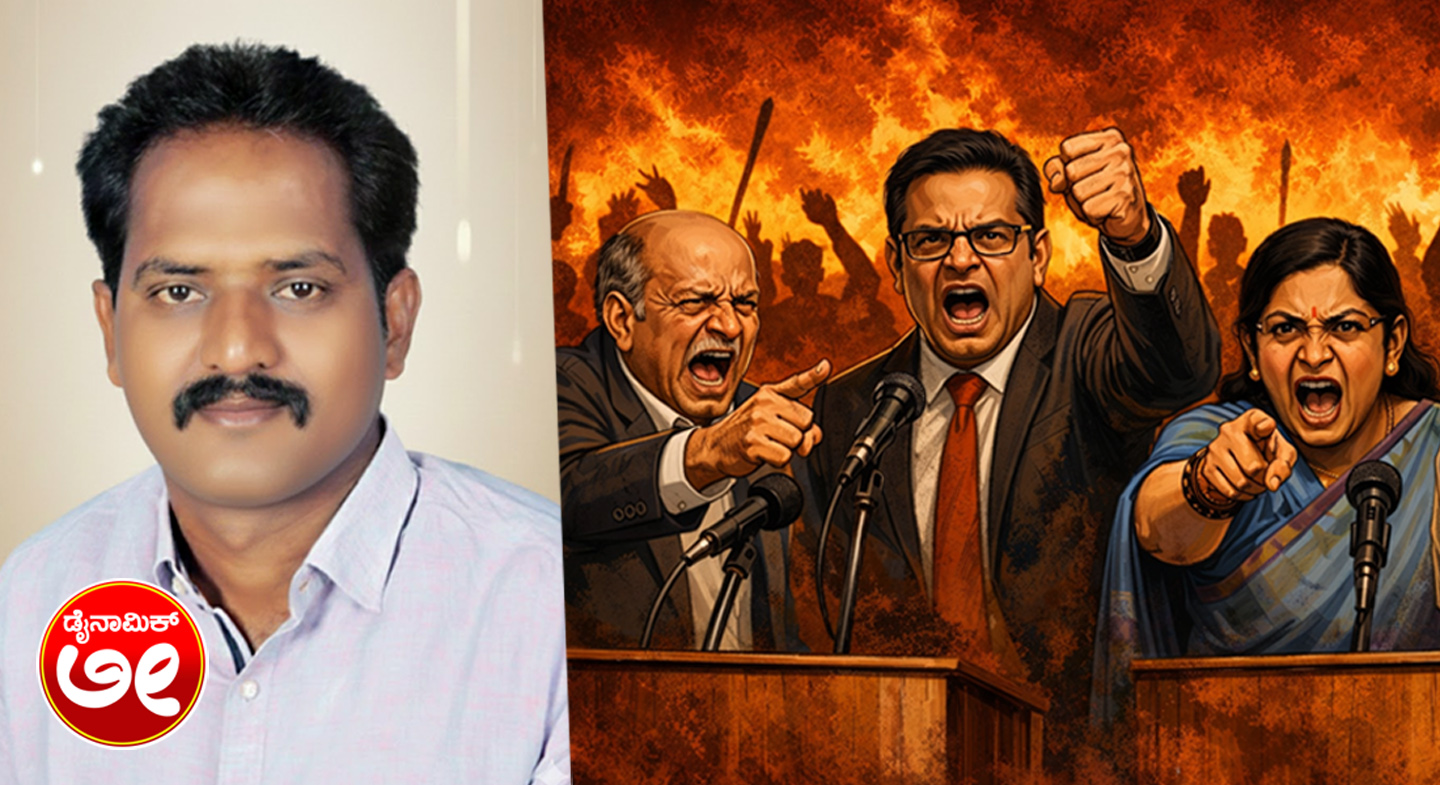
At the same time, some provisions of the Bill may carry the risk of unconstitutional misuse. The inability to clearly distinguish between legitimate criticism of religion or communities and outright hate speech could open the door to misuse by vested interests.
The Bill has been opposed by the BJP, Hindutva groups, and even the JD(S). Notably, Karave leader Narayan Gowda has also taken a stand against it. The government must address their stated concerns. Resistance from Sangh Parivar-affiliated groups is unsurprising, as hate speech has long been central to the BJP’s politics of power, often fuelling communal tensions to gain political advantage. Legally curbing this would effectively strike at the roots of divisive politics.
Despite several cases already registered against habitual hate speech offenders in the state, these socially destructive elements have often received protection and patronage under the guise of Hindutva (not Hinduism) from those in power, cutting across party lines. The weak enforcement of existing laws has enabled this trend, making the introduction of a dedicated law both necessary and justified.
The new Bill seeks to address loopholes in existing laws and strengthen provisions against hate speech or incitement to hate crimes based on religion, community, language, place of birth, caste, gender, or residence-covering all communities in Karnataka, not just Muslims. First-time offenders face imprisonment ranging from one to seven years along with a fine of ₹50,000, while repeat offences can attract up to ten years in prison. The law applies uniformly to all—Hindus, Muslims, Christians, Jains, Buddhists, Parsis, Lingayats, and others.
Under the proposed legislation, hate speech cases will be tried in JMFC courts, with investigations led by the Superintendent of Police. The law covers hate speech disseminated through public statements, writings, audio-visual content, and electronic media that incite hostility, violence, or discord between individuals or groups based on religion, caste, race, language, gender, birthplace, or place of residence.
Those seeking to divide society in the name of religion and fracture Karnataka’s pluralistic harmony find this law difficult to accept. If such resistance is evident even in Karnataka, one can only imagine the reaction if similar laws were introduced in states like Gujarat, Uttar Pradesh, Delhi, or Bihar.
By removing the inadequacies of earlier IPC provisions and imposing stringent penalties for hate speech and incitement, this law has the potential to curb political projects that thrive on creating divisions between communities, castes, classes, professions, and languages.
May secularism, social welfare, and communal harmony take deep root in this land. Khasim Saab expressed hope that the Congress party and the state government will demonstrate greater maturity and resolve in ensuring the comprehensive and fair implementation of this law.