#1 Daily News Updates, Politics, Crime, movie reviews, Latest News - dynamicleader.in
US Archives » Dynamic Leader English - Daily News Updates
Home Posts tagged US
International

US Submarine Strike on Iranian Warship Near Sri Lanka: What We Know

Prathiban DC 

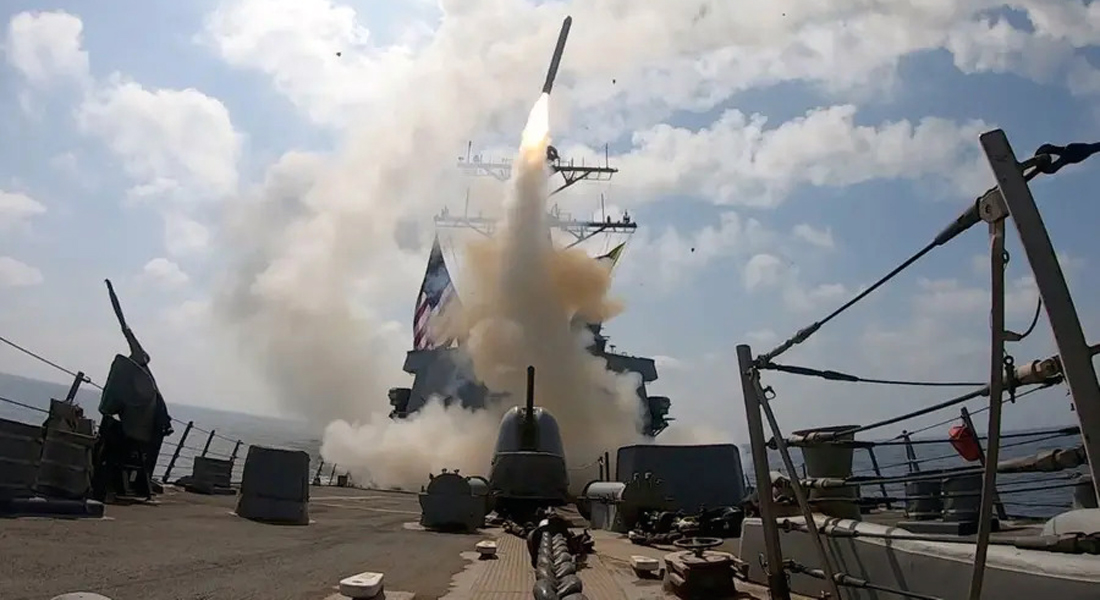
Tensions in international waters intensified after reports confirmed that a United States Navy submarine struck and sank an Iranian naval vessel near the southern coast of Sri Lanka. The incident, which reportedly occurred close to the port city of Galle, has raised fresh concerns about escalating military friction involving Iran and the United States.

According to officials in Washington, the Iranian ship involved was the IRIS Dena, a warship believed to be operating in the Indian Ocean region at the time of the attack. United State defense authorities stated that the submarine engagement was a deliberate military action carried out in international waters. The Pentagon has not disclosed operational details such as the exact submarine involved or the weapons used, but sources indicate that torpedoes were deployed.

Sri Lankan authorities confirmed that a distress signal was received from the damaged vessel, prompting an immediate search-and-rescue operation. Naval and emergency teams from Sri Lanka rushed to the scene and managed to rescue several crew members. Initial reports suggest that roughly 180 personnel may have been onboard the Iranian ship. More than 30 survivors have reportedly been hospitalized in Galle, while many others remain unaccounted for, raising fears of significant casualties.

The United States maintains that the strike was conducted within the framework of ongoing regional security operations amid heightened tensions with Iran. However, Iranian officials have strongly condemned the incident, describing it as an act of aggression and warning of potential consequences. Tehran has not yet released a full casualty figure but has indicated that investigations are underway.

Security analysts note that this development marks a rare instance of a modern naval vessel being sunk by submarine action in a real-world conflict scenario, underscoring the seriousness of the current geopolitical climate. Maritime observers are also closely watching commercial shipping lanes in the Indian Ocean and nearby regions, as any escalation could disrupt vital global trade routes.

Sri Lanka has so far positioned itself strictly in a humanitarian role, focusing on rescue and medical support for survivors. The government has not indicated any military involvement.

The situation remains fluid, with diplomatic channels expected to become active in the coming days.

International observers warn that further escalation between Washington and Tehran could have broader implications for regional stability, energy markets, and maritime security.

International

Greenland Row Sends Shockwaves Through US-European Trade Ties

New Trade Confrontation
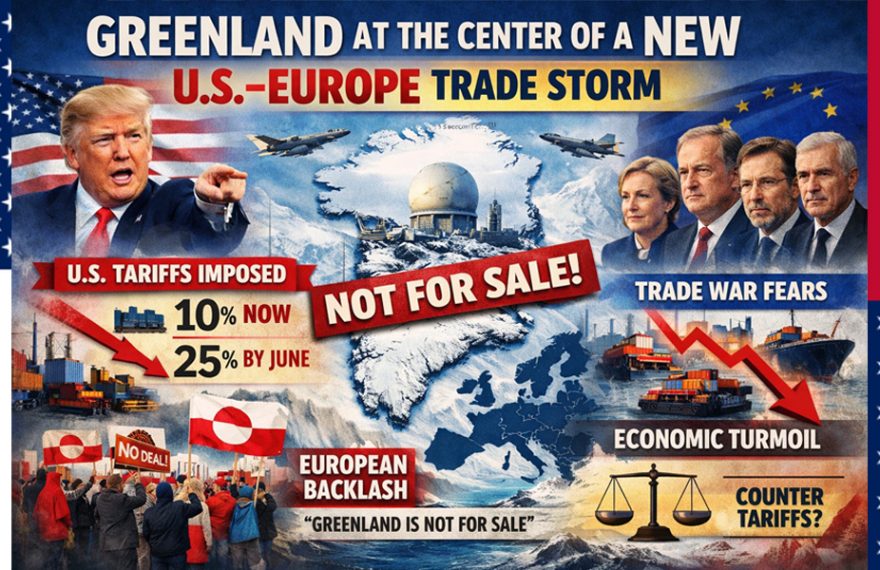
Tensions between the United States and several European countries have intensified after Washington announced new trade tariffs linked to a growing diplomatic dispute over Greenland, a semi-autonomous Arctic territory governed by Denmark.

The U.S. administration has confirmed that it will impose additional import duties on goods coming from eight European nations, including Denmark, the United Kingdom, Germany, France, Sweden, Norway, Finland and the Netherlands. The initial tariff rate is set at 10 percent, with a warning that it could rise sharply in the coming months if negotiations fail.

According to U.S. officials, the decision is tied to national security concerns surrounding Greenland’s strategic location in the Arctic region. The island is seen as increasingly important due to rising geopolitical competition, expanding military interests, and its proximity to key Arctic shipping routes and missile-defence zones.

However, European leaders have strongly rejected Washington’s approach, calling the use of tariffs political pressure through trade. Denmark and Greenland’s local government have reiterated that Greenland’s future is not open to external negotiation and that any decision regarding the territory lies solely with its people.

The European Union has responded by signalling unity among member states and warning that counter-measures are being considered if the tariffs are implemented. Officials have also expressed concern that the move could undermine existing trade agreements and strain long-standing transatlantic partnerships.

Greenland’s leadership has taken a firm public stance, stating that the island is not for sale and that its political status is based on democratic self-determination. Public demonstrations and official statements from Greenland have reinforced opposition to any foreign control.

The dispute has already begun to impact broader diplomatic relations. Planned trade discussions between the U.S. and the European Union have slowed, and global markets are watching closely for signs of escalation. Analysts warn that continued tensions could lead to a wider trade confrontation at a time when global economic stability remains fragile.

Despite the sharp rhetoric, both sides have left the door open for dialogue. European diplomats have called for diplomacy over confrontation, while U.S. officials insist negotiations remain possible if security concerns are addressed.

As the tariff deadline approaches, the Greenland issue has emerged as more than a regional disagreement – it now represents a significant test of U.S.–European relations and the future balance between security, sovereignty, and global trade.