Prathiban DC
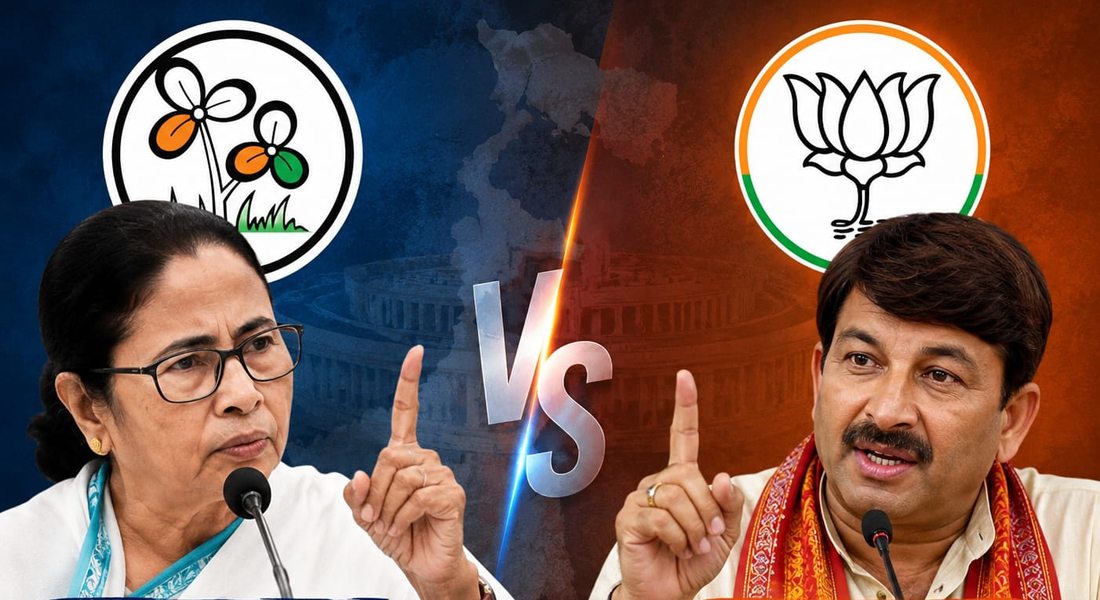
A recent political exchange has sparked debate across India after Mamata Banerjee reportedly asserted that she would not resign from her position as Chief Minister. Responding to this, Manoj Tiwari criticized her stance, suggesting that such a position appears to challenge the spirit of democratic governance.
At the heart of this issue lies a fundamental principle of democracy: power is granted by the people and can just as easily be taken away by them. In a democratic system like India’s, elected leaders hold office only as long as they enjoy the confidence of the public or maintain a majority in the legislative assembly. When that support fades, stepping down is not just a legal formality it is seen as a moral responsibility.
Manoj Tiwari’s remarks reflect this viewpoint. He argued that refusing to resign, especially in a situation where leadership is being questioned, could be interpreted as placing personal authority above constitutional norms. According to him, the act of formally resigning is more than just a signature on paper it symbolizes respect for democratic processes and institutions. It allows leaders to exit their roles with grace and dignity, maintaining the integrity of the system.
On the other side, Mamata Banerjee’s statement can be viewed through a political lens. Leaders often make such declarations to signal confidence, assert control, or rally support among their followers. In high-stakes political environments, such remarks are sometimes aimed at strengthening public perception of stability and resilience, rather than indicating a literal refusal to follow constitutional procedures.
This situation also highlights the ongoing rivalry between political parties, particularly between the ruling party in West Bengal and the Bharatiya Janata Party (BJP). Statements like these are not made in isolation they are part of a broader narrative where both sides attempt to shape public opinion and position themselves as defenders of democratic values.
It is important to note that the Constitution of India provides clear mechanisms for leadership changes. A Chief Minister cannot continue in office without majority support in the state assembly. If such support is lost, resignation or removal becomes inevitable, regardless of personal declarations. Therefore, the debate is less about whether a leader can refuse to resign and more about how they choose to respond to political challenges.
Ultimately, this controversy is a reminder of the delicate balance between political power and democratic accountability. While strong leadership often involves confidence and determination, it must also align with constitutional principles and public mandate. The way leaders handle such moments not only affects their personal legacy but also influences public trust in democratic institutions.
As the situation unfolds, it will continue to draw attention from political observers and citizens alike, raising broader questions about leadership, responsibility, and respect for the democratic process in India.